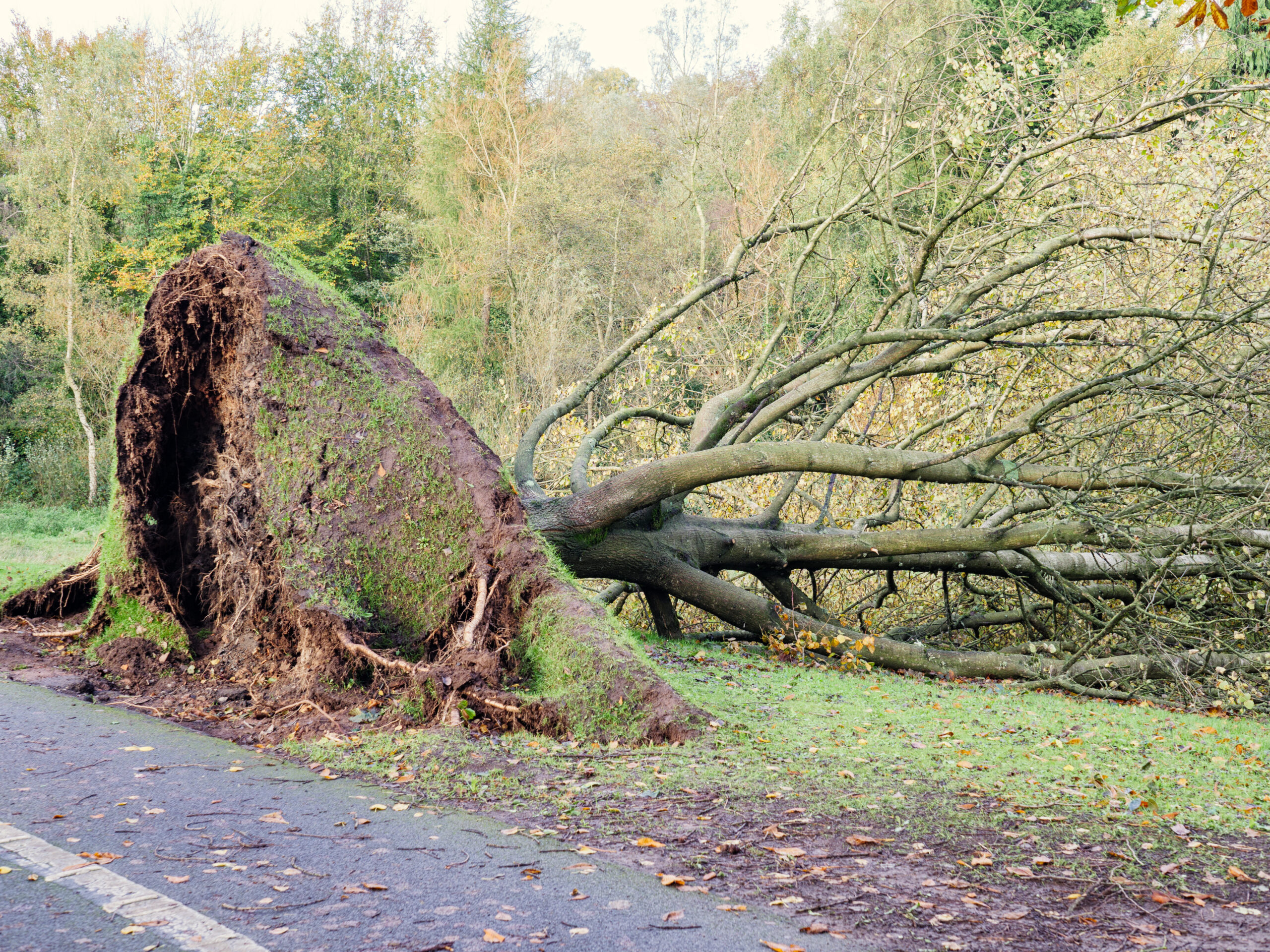
Parts of Baltimore County sit in valleys where summer thunderstorms idle over the western suburbs and drop rain fast with gusts of wind that homeowners here feel in their trees. When the wind dies down and you find a split limb hanging over the driveway or a trunk that looks newly cracked, you need to know what to do with a tree damaged in a storm.
Determining if a damaged tree is an emergency or something that can wait tends to come down to two things: how bad the damage is from the ground, and what it could fall on. When it isn’t obvious, a Licensed Tree Expert can assess the damage and recommend the safest next step.
Key Takeaways
- A branch does not have to be on the ground to be dangerous; suspended limbs over a roof or walkway are among the worst hazards.
- Emergencies come down to severity crossed with the target: what failed, and what it could land on.
- Some of the most dangerous damage is the kind you cannot see from the ground, including hairline canopy cracks, a limb hung up deep in the crown, and subtle root-plate movement.
- Many storm-damaged trees can be saved, but a prompt professional assessment is how you know for sure.
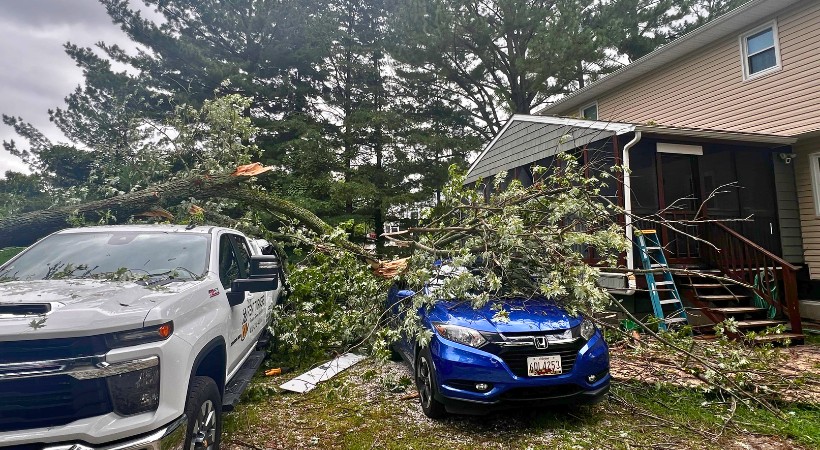
Trees that have fallen onto structures or vehicles create immediate safety risks and should be addressed promptly.
What Should You Check First After a Storm Damages Your Tree?
Before anything, ensure it’s safe to stand in the area. Storm-damaged trees can pull down power lines, hold limbs under tension, and store energy in ways that make partial failures unpredictable. A few ground rules you can start with are:
- Stay well clear of any downed trees or those in contact with power lines, and treat every line-touching tree as energized. Call your utility, and call 911 if a line is down.
- Do not walk under a damaged canopy or approach a leaning trunk. Photograph the damage from a safe distance for your own records.
- Do not attempt chainsaw work on storm-damaged trees. Limbs under tension and stored energy can release without warning, and a partially broken branch can fall the moment you make a cut.
Once it’s clear the area is safe and no lines are involved, you can go on to assessing the damage.
Which Types of Storm Damage Need Emergency Service?
If the failure is severe and is over something valuable, treat it as urgent. If it’s minor and over open ground, it can usually wait for a scheduled visit. A limb that clearly needs to come down is always worth a professional look.
Signs of an Emergency
Any of the following are indicators of an emergency:
- Large hanging or suspended limbs, sometimes called widow-makers, over a roof, driveway, or walkway
- A split or cracked main trunk
- A new or worsening lean, especially with soil heaving or a lifting root plate
- Any tree or limb in contact with a structure or a power line
Signs You Can Wait for a Scheduled Assessment
Any of the following can typically wait for a scheduled visit from a Licensed Tree Expert:
- A single broken branch that is not hanging over a structure or walkway
- Minor bark scrapes and small-diameter limb loss the tree can seal on its own
What Storm Damage Is More Serious Than It Looks?
Some of the most dangerous storm damage is the damage not obvious from your driveway, which is why a tree that’s still standing after a storm is not the same as stable. These hazards live in the crown or the root zone and can completely fail days or even weeks later.
Cracks and Splits High in the Crown
Hairline cracks high in the crown or a split starting at a branch union are easy to miss from the driveway. They indicate a partial failure that can finish in the next wind event, long after the storm has passed.
A Hung-Up Limb in the Canopy
A broken limb can lodge deep in the crown where you might not see it at all. Contrary to the obvious limb dangling over your car, this is out of sight and can drop hours or days after the storm.
Root Plate Movement and Internal Weak Points
A slight soil heave or a lean too small to cause alarm still means the anchorage of the tree is compromised. Usually, a shifted root plate doesn’t self-correct, even though a lean due to heavy saturation may stabilize as the ground dries. Internal weak points, such as included bark, add hidden weakness that a storm can bring to light. They are worth noting during any storm damage cleanup.
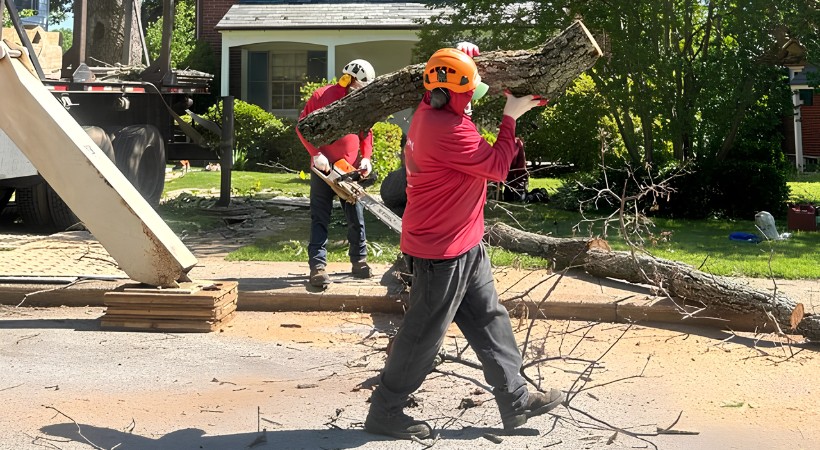
Debris removal and haul-away are part of a professional storm damage cleanup, which keeps the site clear once the tree work is done.
Can a Storm-Damaged Tree Be Saved?
Many storm-damaged trees can be saved. The deciding factor involves how much of the structure survived.
What’s Often Savable
The following can indicate the tree is possibly savable:
- A sound trunk with less than about half the crown lost, restored through careful pruning over several growing seasons
- A structurally sound tree with a weak union or heavy limb, where cabling and bracingcan reinforce it and reduce the risk of failure in the next storm
What Indicates Removal
Once a tree crosses these thresholds, removal is the safer option:
- More than about half the crown lost
- A split trunk
- More than a third of the bark lost around the trunk’s circumference
- A lean with a shifted root plate
What Happens During a Storm Damage Assessment?
During a storm damage assessment, you can expect:
- An on-site evaluation of the damage and the tree’s structural condition
- A straight answer on whether to save versus remove the tree, with the reasoning behind it
- A clear written estimate outlining the scope of work
A-AAA has held three Maryland Licensed Tree Expert licenses, worked across the greater Baltimore area since 2002, and prioritizes storm-damaged trees resting on structures or blocking access. Risk mitigation before the next wind event is always the goal.
Frequently Asked Questions About Storm-Damaged Trees
Does homeowners insurance cover storm-damaged tree removal?
It can, but it depends on your policy and what the tree hit, so your insurer is the right source for a firm answer. As a general rule, coverage is more likely when a fallen tree damages an insured structure than when a tree comes down on open ground. Keeping dated photos of the damage helps whether or not you file a claim.
Do I need a permit to remove a storm-damaged tree in Howard County?
For most storm-damaged trees on private residential property, Howard County generally allows removal, especially when the tree poses an immediate safety hazard. However, additional restrictions may apply if the tree was planted as part of an approved landscape or forest conservation plan or if the property is located within a Critical Area or Buffer. If you’re unsure, check with Howard County before removing a protected or streamside tree.
Can I help a storm-stressed tree recover on its own?
Give it time before deciding, avoid heavy corrective pruning right after the storm, and never top it, since topping creates weak regrowth. Water during dry spells while the roots recover, and have a Licensed Tree Expert set the restoration plan for anything beyond minor cleanup.
What happens to the branches and debris after storm damage is cleared?
Under Maryland practice, fallen wood and debris on private property are the owner’s responsibility, which is why debris removal and haul-away are part of a professional storm damage cleanup rather than something you are left to handle alone. That keeps the site clear and safe once the tree work is done.
How can I lower the risk of storm damage before the next storm?
Structural pruning, removing already-dead or weakened limbs, and having mature trees inspected for weak unions and included bark all reduce failure risk before a storm hits. This is where routine care pays off, especially on the large, mature-tree lots common in Towson and Lutherville-Timonium.
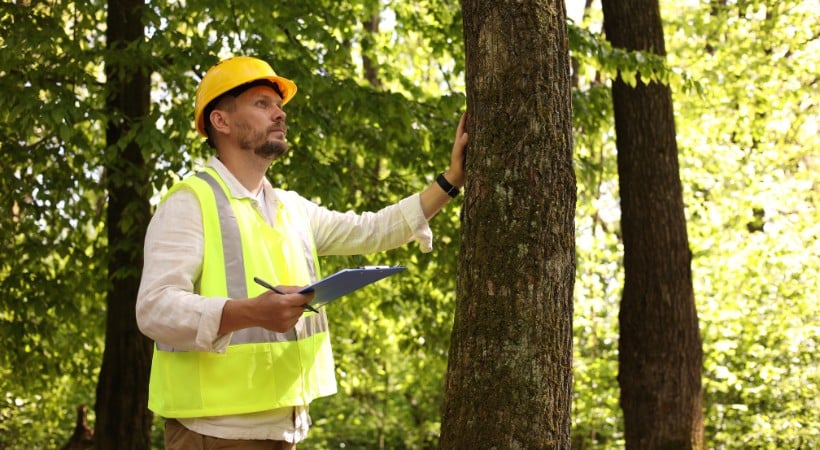
During a storm damage assessment, a Licensed Tree Expert evaluates the damage and the tree’s structure on site, then provides a clear written estimate.
Call A-AAA for Your Storm Damage Needs
Acting quickly after a storm protects both the tree’s chance of recovery and whatever’s beneath it. A tree assessed in the days after a storm is more likely to be restored than one left to get weaker through the rest of the season. A professional look replaces an anxious guess with a decision you can trust.
If your yard took a hit this summer, request a proposal online and speak with a Licensed Tree Expert who has experience working in your area. The sooner you get started, the better off your tree will be!

After a 31-year career as a special education teacher in Baltimore County Public Schools, Marcee retired in 2025 to focus full time on A-AAA Tree Service. Having spent two years learning the business before her retirement, she now plays an active role in the company’s operations and customer care.
Related Articles
Should I Grind a Stump or Leave It?
Not sure whether to grind that stump or leave it alone? Learn the risks, the decision points, and how A-AAA handles stump grinding in greater Baltimore.
How to Tell If a Tree Is Dead or Just Stressed
A bare or thinning tree in a Baltimore-area summer may be stressed, not dead. Learn how to tell the difference and when to bring in a Licensed Tree Expert.
What Cabling and Bracing Does for Your Mature Trees
Learn how cabling and bracing can support mature trees with weak unions, included bark, or heavy limbs, and when they're the right call vs. removal.