There’s a moment during almost every tree removal consultation when the homeowner looks up at the canopy hanging over the roof, the fence line, the garden beds, or the neighbor’s driveway and asks the same thing: “How are you going to get that down safely?”
The answer is: very carefully — and never without a plan. Professional tree removal is a step-by-step process built around protecting the property just as much as removing the tree itself. When removal is the right call, experienced crews rely on years of technical training, specialized equipment, and coordinated safety procedures to dismantle the tree as safely and efficiently as possible.
Key Takeaways
- A professional tree removal in Baltimore follows a planned sequence: site assessment, safety setup, sectional dismantling from the top down, ground processing, and cleanup.
- The removal method (climbing, bucket truck, or crane) is chosen during the on-site proposal based on tree size, location, surrounding structures, and yard access.
- Most residential removals in the Greater Baltimore area take a few hours to a full day, with crane-assisted work often finishing faster on large trees.
- Private property tree removals in Baltimore generally don’t require a permit, but trees on the street side of the sidewalk are city-owned and have different rules.
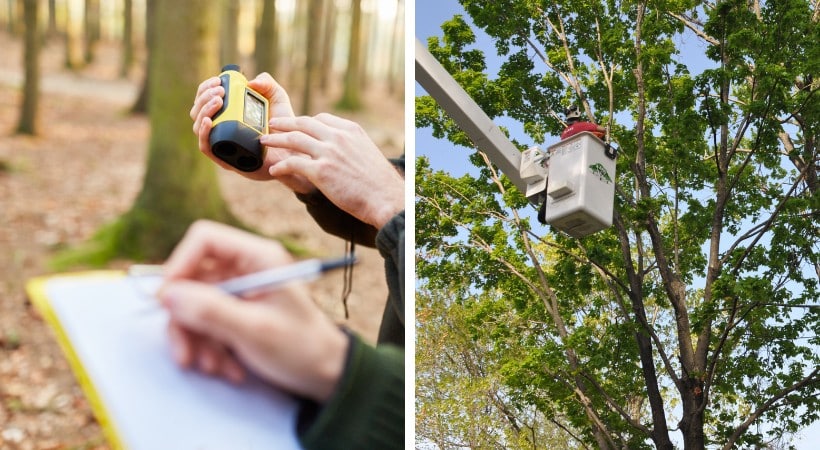
Every removal starts with a Licensed Tree Expert evaluating the tree on site and confirming whether climbing, a bucket truck, or a crane is the safest fit for the property.
How Do Tree Experts Plan a Safe Tree Removal?
The tree removal process starts during an on-site proposal visit, well before the day of the work, so the crew arrives knowing exactly what they’re dealing with. The same approach applies to all our tree removal services, whether the tree is in a tight backyard or a wide-open lot.
What the Initial Walk-Through Covers
Our Licensed Tree Expert evaluates the tree’s lean, structural condition, dead wood, decay, and root health, but the surrounding property is just as important. They’re also assessing nearby structures, obstacles, and anything else that could be affected during the removal, including:
- The house
- Fences
- Power lines
- Garden beds and landscaping
- Nearby trees
- Neighboring property
The crew also establishes a controlled drop zone, which is the designated area where limbs and trunk sections will be lowered, staged, and processed throughout the job. That planning helps guide everything from equipment placement to how each section of the tree is removed.
How Tree Experts Choose the Safest Removal Method
The safest removal method depends on the tree’s size, condition, surrounding obstacles, and how much access the crew has to the property. During the planning phase, the expert determines which approach gives the crew the most control while minimizing impact on the home, landscape, and surrounding structures. Common removal methods include:
- Climbing with Rigging: Common for tight backyards and areas with limited equipment access. Climbers dismantle the tree in sections using ropes and lowering devices to carefully control where each piece goes. This method typically has the smallest equipment footprint on the property.
- Bucket Truck Removal: Used when there’s enough driveway or curb access to position equipment near the tree. Bucket trucks allow crews to work more efficiently and reduce the amount of manual climbing required.
- Crane-Assisted Removal: Best for very large trees, hazardous trees, or removals near homes and structures where there’s little room for error. The crane lifts sections directly from the canopy, allowing for controlled removal with less impact below.
How Should I Prepare My Property for Tree Removal?
A little preparation before the crew arrives helps the job move more efficiently and reduces the chances of delays or accidental damage around the work area. Most of the preparation simply involves clearing space so crews can safely move equipment, lower branches, and access the tree without obstacles in the way. Before removal day, homeowners should:
- Move vehicles out of the driveway and clear of the work area.
- Move outdoor furniture, grills, planters, garden art, and kids’ toys out of the drop zone.
- Keep pets inside for the entire job, including bathroom breaks.
- Pick up pet waste from the work area; rigging gear that touches it has to be cleaned or replaced.
- Cover or relocate planting if they are moveable.
- Unlock gates and clear walkways for equipment access.
- Disable irrigation systems so sprinklers don’t turn on while we’re working.
- Notify neighbors, especially if you share a fence line or driveway.
- Confirm wood and chip preferences with the office before the day.
What Happens on Tree Removal Day?
The tree removal process follows a top-down sequence, with the crew taking the tree apart in pieces instead of felling the whole thing at once. The standard residential removal in Baltimore follows the same six-step process regardless of if the crew climbs or uses a crane.
The Standard Removal Sequence
- Safety Setup: The crew sets cones, signage, a designated drop zone, and a no-entry buffer. Personal protective equipment goes on: helmets, eye and ear protection, chaps, and cut-resistant gloves.
- Upper Canopy Work: The climber goes up or the bucket truck and crane get into position. Small limbs are the first to come off to give clear access to the structural wood.
- Mid-Canopy with Rigging: Larger limbs are tied off, then lowered using friction brakes, blocks, and lowering devices. There’s no free-falling.
- Trunk Sectioning from the Top Down: The trunk comes off in pieces during a crane and are lifted out and set in the drop zone.
- Ground Processing: While the climbing crew works above, the ground crew chips brush and cuts trunk sections into log lengths in real time.
- Final Cleanup: This is when debris is hauled, sawdust is raked and blown off landscape, and equipment paths are cleared.
Why Most Residential Trees Are Removed in Sections
Felling an entire tree at once only works when there’s open ground equivalent to the tree’s full height in the planned direction, and almost no Baltimore residential property has that layout. Sectional dismantling with proper rigging keeps cut pieces controlled even when the tree is a few feet from the house.
FROM THE FIELD: When a tree is directly next to a home, every limb has to be controlled during the descent. The customer doesn’t see most of what we’re doing in the tree, but every knot, block, and rope is what keeps that limb from ever touching the roof.
Will the Tree Removal Damage My Yard?
A careful tree removal will leave some scuffing where equipment travels. To counter that, we use a layered approach to keep lawn and landscape damage minimal.
How Crews Protect Your Lawn and Hardscape
Plywood pathways and composite ground protection mats distribute the weight of trucks and chippers, which lowers compaction and rutting. Crane removals offer a specific advantage to lawns: the crane stays in one staging spot, usually the street or driveway, and the tree sections are lifted out cleanly instead of dragged across the grass. Garden beds and delicate planting near the drop zone are flagged during the proposal, so you can move what’s movable.
What’s Realistic to Expect Even with a Careful Crew
Some lawn compression where mats sit is normal, along with minor scuffing in equipment paths and sawdust on hardscape that gets cleaned up. Soil condition matters in Maryland: frozen winter ground and dry summer ground tolerate equipment a lot better than the saturated ground of wet spring and fall. For non-emergency removals, scheduling around soil condition is one of the most important factors in whether the yard takes days or weeks to recover.
How Long Does Tree Removal Take?
In Baltimore, most residential tree removals take a few hours to an entire workday, depending on the tree’s size, location, and access.
Typical Time by Tree Size
- Small Tree (under 30 feet, accessible): 1 to 3 hours.
- Medium Tree (30 to 60 feet): 3 to 6 hours.
- Large Tree (60 feet and up): A full day, sometimes two.
- Crane-Assisted Removal: Typically faster than the same job done by climbing, even with crane setup time on either end.
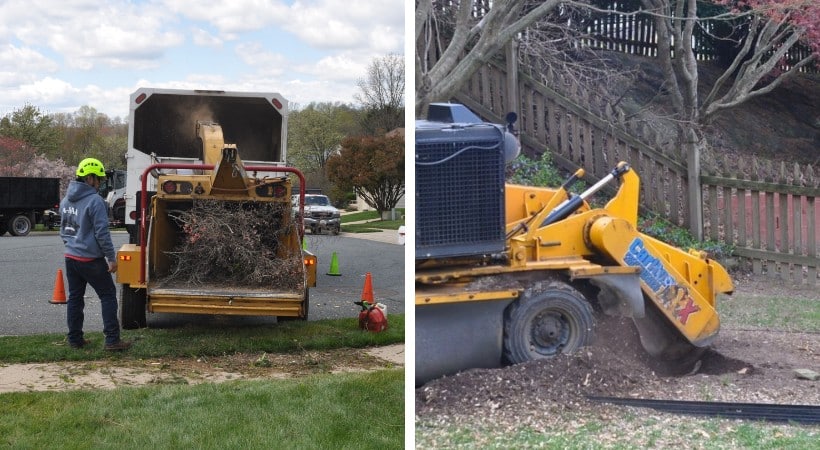
Brush is chipped on site as the crew works, and stump grinding can be added to the same job or scheduled separately once Miss Utility has marked underground utilities.
What Happens After the Tree Comes Down?
Once the tree comes down, the crew shifts into processing and cleanup mode. The yard should look cared for when they leave, with the only blatant change being the missing tree.
Wood, Chips, and Cleanup
Branches are chipped on site, trunk sections are hauled away or cut to rounds in the desired length, and sawdust is raked and blown off hardscape. Wood-chip drop is available case-by-case if you want them for landscape beds.
Stump Grinding (Optional Add-On)
Stump grinding is a separate service that can be added to the same work order or scheduled later. The stump is ground four to six inches below grade, plus visible surface roots, with the resulting wood chips used to backfill the hole. Grinding requires a Miss Utility (811) ticket, so underground utilities are marked first, which is why it’s usually scheduled a few days after the removal. Specifics can be found on our stump grinding service page.
Frequently Asked Questions About the Tree Removal Process
Do you need a tree removal permit in Baltimore?
In Baltimore, trees on private property generally don’t need a permit. Trees between the sidewalk and curb, however, are owned by the city and fall under Baltimore City’s Forestry Division, which means a permit and city involvement are required. As part of the proposal, we’ll handle that conversation for you.
Will I need to be home during the removal?
It’s helpful to be home or available by phone when the crew first arrives so you can confirm access points, cleanup expectations, wood chip preferences, and any last-minute questions with the crew lead.
Once the work begins, though, the crew handles the removal independently, and homeowners do not need to stay outside or monitor the job. In fact, staying clear of the work zone helps keep everyone safer while equipment is operating and sections of the tree are being lowered.
Will my lawn be damaged?
Some scuffing or compression in equipment paths is normal, but reputable crews use plywood pathways and ground protection mats. Crane removals stay in one fixed staging spot to limit lawn impact, and soil conditions (frozen, dry, or saturated) also affect how the yard handles equipment.
Is stump grinding included in the cost of tree removal?
No. Stump grinding is a separate service, but it can be added to the same work order to save a return trip. The stump is ground four to six inches below grade, with visible surface roots taken down to the same depth.
What if the crew finds something unexpected, like hidden decay or a hornet nest?
The crew lead will pause and walk you through it before moving forward. Hidden decay sometimes alters the rigging plan; a hornet nest may push the job to another day. Either way, expect clear communication, not surprises down the line.
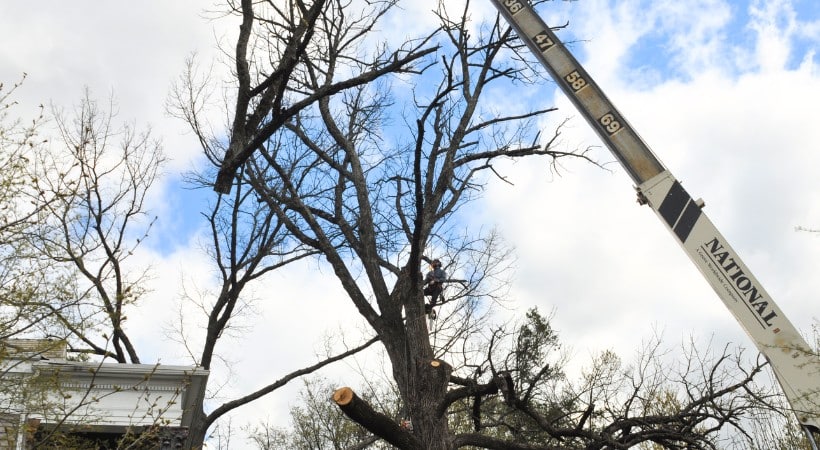
Crane-assisted removal lifts each cut section out of the tree cleanly, which is often safer than rigging large pieces down by rope when the tree is close to a structure.
For Safe, Professional Tree Removal in Baltimore, Call A-AAA Tree Service
A professional tree removal is a planned, methodical sequence designed to keep your property, the crew, and your neighbors safe from the first cone going down to the last broom-stroke on the driveway.
If you have a tree in the Greater Baltimore area that’s dead, declining, storm-damaged, or becoming a risk near structures, utilities, or high-traffic areas, the team at A-AAA Tree Service can help you understand the safest path forward. During the proposal, a Maryland Licensed Tree Expert will assess the tree, explain the recommended removal method, answer questions about access and cleanup, and walk you through exactly what to expect on removal day.
Call us today at 410-321-0921 or schedule a proposal online.

After a 31-year career as a special education teacher in Baltimore County Public Schools, Marcee retired in 2025 to focus full time on A-AAA Tree Service. Having spent two years learning the business before her retirement, she now plays an active role in the company’s operations and customer care.
Related Articles
Tree Inspection Before Winter in Baltimore
A tree inspection before winter shows what bare branches reveal. See what a Licensed Tree Expert checks and what happens next for Baltimore homeowners.
Should I Grind a Stump or Leave It?
Not sure whether to grind that stump or leave it alone? Learn the risks, the decision points, and how A-AAA handles stump grinding in greater Baltimore.
How to Tell If a Tree Is Dead or Just Stressed
A bare or thinning tree in a Baltimore-area summer may be stressed, not dead. Learn how to tell the difference and when to bring in a Licensed Tree Expert.