Winter storms have already begun battering Maryland this season, with damaging winds, ice, and heavy snow creating hazardous conditions across Baltimore County and surrounding areas. With spring storms right around the corner – and recent severe weather still fresh in many residents’ minds – homeowners are taking a closer look at trees that could pose a safety risk during the next major storm.
Removing dangerous trees improves safety, but it also raises an important question: how much does tree removal cost?
Key Takeaways
- Tree size and access drive labor and equipment needs, which is why tall trees or those close to homes, power lines, or fences cost more to remove than open-yard trees.
- Licensed Tree Experts in Maryland follow stricter safety and insurance requirements, which can raise pricing – but also reduce liability and risk for homeowners compared to unlicensed operators.
- Emergency removals come at a premium because they require immediate response, crew overtime, and rapid equipment mobilization, unlike scheduled removals that allow for standard pricing.
- Optional add-ons, including stump grinding, also affect the final cost.
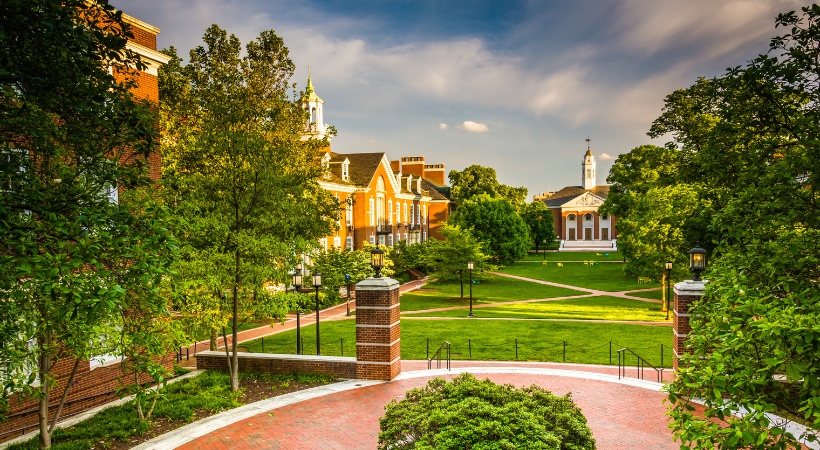
Young and mature trees lining the campus of Johns Hopkins University in Baltimore, MD, are an example of trees that add significant property value but may require professional assessment if they show signs of decline or damage.
What Are the 7 Factors That Influence Tree Removal Costs in Baltimore?
Several key factors work together to determine what you’ll pay for tree removal in Baltimore County and surrounding areas. Understanding each factor helps explain why quotes can vary significantly between properties and companies. Here are the seven most important elements that Licensed Tree Experts consider when pricing your tree removal project.
1. Tree Size and Height
Height serves as the primary cost driver for tree removal in the Baltimore area. Small trees under 25 feet typically require only basic chainsaws and hand tools, making removal relatively straightforward and fast. Medium-sized trees between 25-60 feet often need bucket trucks or skilled climbing techniques, increasing both time and equipment requirements.
Large trees, particularly those over 60 feet, present significant challenges that directly impact costs. These massive trees often require crane assistance, extensive planning, and specialized rigging techniques to safely dismantle without damaging nearby structures. Trunk diameter also affects removal complexity, as a thick oak trunk takes considerably longer to cut and process than a slender maple of the same height.
2. Tree Location and Accessibility
Where a tree is located has a major impact on removal cost. Trees growing close to homes, garages, fences, or other structures require controlled, piece-by-piece removal instead of fast, open drops. That extra precision takes more time and specialized equipment.
Access to the tree also matters. Backyard trees are often more expensive to remove if crews can’t bring large equipment or a crane directly to the work area. In these cases, tools and materials may need to be carried through gates – or even through the house – and smaller equipment may be required, increasing labor time. Tight-space removals often involve custom rigging and advanced techniques to safely lower branches without causing damage.
Urban Baltimore properties frequently have tighter lot lines than suburban neighborhoods, which can further limit access. Trees near power lines introduce additional safety requirements and may require coordination with the utility company. Trees that extend over neighboring properties also require extra planning and protective measures to prevent damage beyond your property line.
3. Tree Condition and Overall Health
Healthy trees versus hazardous or diseased trees require completely different removal approaches.
Some of the ways tree condition plays into the risk and cost of tree removal include:
- Dead or dying trees become unpredictable during removal, with brittle branches that can break unexpectedly and compromise worker safety.
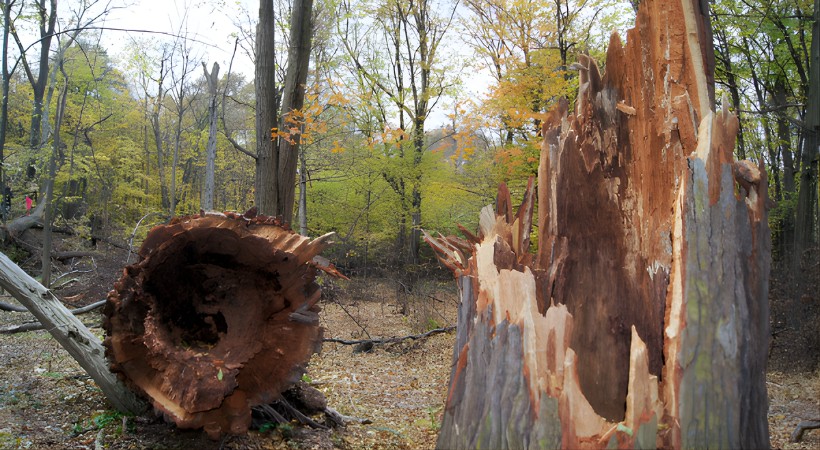
- Storm-damaged trees present unique challenges that make them more difficult to safely bring down.
- Partially fallen trees under tension, split trunks, or trees with damaged root systems require extreme caution to prevent collateral damage.
- Emergency situations involving trees on structures demand immediate response capabilities, which commands premium pricing and precise work.
- Trees with extensive decay or structural damage often require careful piece-by-piece dismantling, extending the time and complexity of removal work.
PRO TIP: If you’re unsure whether a tree poses a safety risk, understanding the common warning signs can help clarify when removal is recommended and when other options may be appropriate.
4. Equipment and Specialized Machinery Requirements
Basic chainsaw and rigging work represents the most cost-effective removal method, but many Baltimore-area properties require specialized equipment. While it would be convenient to just cut a tree at the base and let it fall, this isn’t feasible in urban environments. For these jobs, we rely on two main pieces of equipment:
- Bucket Trucks: They provide safe access for medium-height trees but need adequate positioning space and ground stability.
- Cranes: When bucket trucks won’t suffice, we turn to crane-assisted removal. This process works best for trees in confined spaces. Crane work involves bringing specialized operators and equipment to your property, significantly increasing project costs.
Equipment transportation and setup time factor into costs as well. Complex removals requiring multiple pieces of equipment take longer to organize and execute safely.
“Every property presents unique challenges. We’ve removed 80-foot oaks from backyards where our crane couldn’t reach the tree. In those situations, we’re climbing and rigging every piece by hand, which can really increase the project time compared to a straightforward crane job. Homeowners don’t always realize how much the equipment and access we have increases the price.” – Jim York, Foreman and Arborist, A-AAA Tree Service
5. Maryland Licensing and Regulatory Requirements
Maryland requires Licensed Tree Experts for all paid tree work, a regulation that protects consumers but affects pricing structures. Professional licensing requirements and credentials ensure workers have proper training and equipment, but these qualifications come with associated costs.
Licensed professionals carry liability insurance and workers’ compensation coverage that unlicensed competitors often skip. While this protection benefits homeowners, it contributes to higher pricing from legitimate companies versus “fly-by-night” operators. A cheap proposal from an uninsured contractor can end up being an expensive mistake if an accident happens.
Trees on or near public property require permits from Baltimore County or the Maryland Department of Natural Resources. Baltimore City also regulates tree work in public areas and rights-of-way. Private property trees typically don’t require removal permits in Baltimore County, but street trees and trees affecting public areas need proper authorization before work begins.
6. Additional Services and Project Scope
Tree removal costs increase when additional services are included or when the overall scope of the project expands. One common add-on is stump grinding, which requires specialized equipment and additional labor to grind the stump several inches below grade and address visible surface roots.
Project scope also matters when more than one tree is involved. Removing multiple trees will increase the total cost of the job, but it is often more cost-effective to handle them during a single visit rather than scheduling separate removals. Combining work allows crews to reduce setup time and equipment mobilization, which can lower the cost per tree.
If you’re unsure whether multiple trees need removal, an on-site proposal can help identify which trees pose a safety risk and which can be monitored instead.
7. Timing and Urgency of the Work
The timing of tree removal plays a major role in cost, particularly when comparing emergency storm response to routine, scheduled work. Emergency storm response commands premium pricing compared to routine scheduled removal. Storm-damaged trees create unpredictable conditions requiring immediate response, specialized safety measures, and often after-hours work.
Planning ahead versus last-minute needs influences costs significantly. Scheduled removals allow companies to optimize crew efficiency and equipment usage, while rush jobs require schedule disruptions and potential overtime labor. Weather-dependent scheduling flexibility helps manage costs when you’re not facing urgent safety concerns.
Frequently Asked Questions About Tree Removal Costs
Do I need a permit to remove trees in Baltimore?
Private property tree removal usually doesn’t require permits in Baltimore County, but trees on or near public property require DNR permits. Street trees, trees affecting sidewalks, and trees in public right-of-ways need proper authorization before removal begins.
Why do Maryland tree removal companies cost more than those in other states?
Maryland requires Licensed Tree Experts for paid tree work, ensuring safety and professionalism, but this results in higher costs than in states with less regulation. Licensed companies carry proper insurance, maintain equipment standards, and employ trained professionals, providing value through reduced liability and guaranteed workmanship.
Should I get multiple quotes for tree removal?
Yes, getting 3-4 quotes from Licensed Tree Experts helps compare value and ensures you understand all factors affecting your specific project cost. Focus on comparing qualifications, insurance coverage, and included services rather than just price alone.
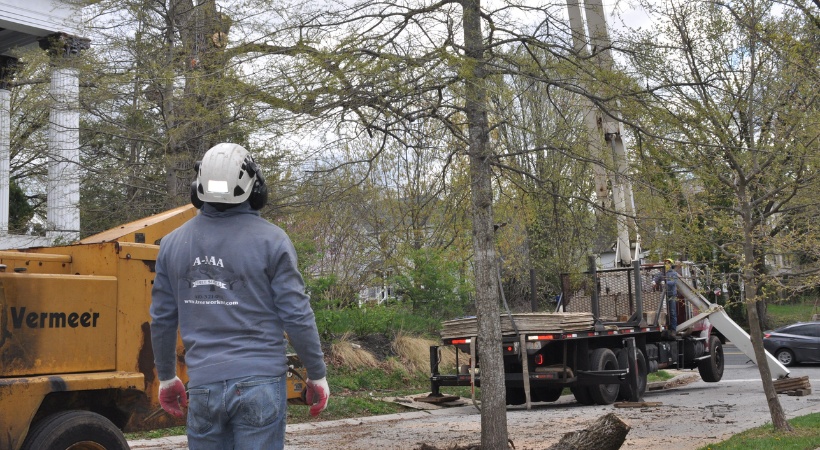
Crane-assisted removal allows A-AAA crews to safely remove trees in tight spaces where traditional felling methods aren’t possible.
Get Your Free Tree Removal Estimate from Baltimore’s Licensed Experts
Understanding these seven cost factors empowers Baltimore homeowners to budget appropriately and ask informed questions when hiring tree removal services. Maryland’s licensing requirements protect consumers and ensure quality work, making Licensed Tree Experts worth the investment for safety and peace of mind. The cheapest quote isn’t always the best value, as safety should be a top priority when it comes to tree removal.
Ready to get an accurate proposal for your tree removal project? The team at A-AAA Tree Service includes multiple Licensed Tree Experts and carries all necessary insurance for tree removal. Call us today at 410-321-0921 or request a proposal online.

After a 31-year career as a special education teacher in Baltimore County Public Schools, Marcee retired in 2025 to focus full time on A-AAA Tree Service. Having spent two years learning the business before her retirement, she now plays an active role in the company’s operations and customer care.
Related Articles
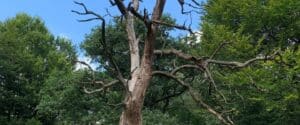
How to Tell If a Tree Is Dead or Just Stressed
A bare or thinning tree in a Baltimore-area summer may be stressed, not dead. Learn how to tell the difference and when to bring in a Licensed Tree Expert.
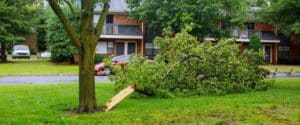
What Should You Do When a Tree Is Damaged in a Storm?
A storm hit your Baltimore County trees. Learn which damage is an emergency, which can wait, and when to request a proposal with a Licensed Tree Expert.
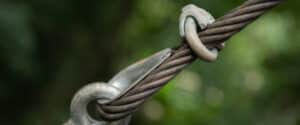
What Cabling and Bracing Does for Your Mature Trees
Learn how cabling and bracing can support mature trees with weak unions, included bark, or heavy limbs, and when they're the right call vs. removal.


