Managing tree removal in Baltimore isn’t just about cutting down a tree – it’s about navigating one of the most complex urban environments. With properties packed tightly together and aging infrastructure woven through every neighborhood, even a small mistake can escalate into significant property damage, costly liability, or city compliance issues.
What makes Baltimore unique is the combination of dense housing, layered utilities, and strict local regulations. For property managers and homeowners, this means tree removal is less about brute force and more about precision, planning, and professional oversight. Understanding these challenges protects historic properties, maintains tenant safety, and avoids expensive legal or repair costs.
Key Takeaways
- Baltimore's rowhouse architecture and narrow streets create access challenges that require specialized crane equipment and sectional removal techniques.
- Property managers face significant liability risks when unqualified contractors damage historic structures, utility lines, or neighboring properties.
- Professional tree services with Maryland Tree Expert licenses understand local regulations and insurance requirements that protect commercial properties.
- Fall and winter planning allows property managers and homeowners to secure qualified contractors before peak season, when equipment availability becomes limited.

Licensed Tree Experts use climbing techniques combined with crane support for safe tree removal in confined spaces.
Baltimore's Unique Urban Tree Removal Challenges
Managing tree removal in Baltimore's urban core presents obstacles that standard suburban techniques simply cannot address. The city's development pattern, historic preservation requirements, and infrastructure constraints create a perfect storm of complications.
PRO TIP: A tree being in a confined urban space is one of the biggest contributors to the cost of tree removal. For more information, see our article on the factors that influence tree removal costs.
Historic Rowhouse Architecture Constraints
Baltimore's iconic rowhouses, particularly in neighborhoods like Bolton Hill and Mount Vernon, were built when lot sizes averaged just 12-16 feet wide, according to Baltimore Heritage. These narrow properties mean mature trees often grow within 3-5 feet of structures on multiple sides. Unlike suburban or rural properties, where we might be able to fell an entire tree, urban removals require complete sectional dismantling.
The proximity to historic facades creates additional complexity. Many rowhouses feature original brick, decorative cornices, and century-old windows that cannot withstand the vibration or impact of traditional removal methods. Homeowners in historic districts face strict Commission for Historical and Architectural Preservation (CHAP) guidelines that can complicate or delay tree work if not properly managed.
Narrow Street Access Limitations
Baltimore's street grid, established in the 1700s and 1800s, prioritized pedestrian access over modern equipment needs. Streets in neighborhoods like Fells Point measure just 20-25 feet wide, leaving minimal maneuvering room for crane trucks that require stable positioning and clear swing radius.
The challenge intensifies in areas with parallel parking, where homeowners must coordinate with city parking authorities to clear space for equipment. According to research by the Congress for New Urbanism, Baltimore's central neighborhoods have blocks averaging just 2 acres and less than 200 feet wide, creating access constraints that many contractors underproposal.
Power Line Configurations in Dense Neighborhoods
Baltimore's utility infrastructure reflects over 200 years of layered development, creating complex overhead and underground networks that vary dramatically by neighborhood. Trees often grow directly through utility corridors, requiring coordination with BGE, Verizon, and Comcast for safe removal.
A single mistake can disrupt service for entire blocks, trigger costly emergency repairs, and expose homeowners to liability.
Property Line and Terrain Challenges
In tightly packed neighborhoods, such as Canton and Highlandtown, mature trees often span property lines or overhang adjacent structures. These situations require an understanding of Maryland property law, proper documentation of permissions, and comprehensive insurance coverage to prevent disputes with neighbors.
Other parts of Baltimore, such as Mount Washington, introduce entirely different complications: steep terrain and hillside properties. Slopes and elevation changes create challenges for equipment setup and increase the risk of erosion or slope instability after removal. Professional contractors account for soil conditions, drainage patterns, and safe access strategies to prevent long-term site damage.
Why Standard Tree Removal Techniques Fail in Confined Spaces
Traditional "drop and cut" tree removal methods that work well in suburban yards become dangerous and destructive in Baltimore's tight urban spaces. The physics of tree removal change dramatically when working within arm's reach of valuable structures and with limited staging areas for equipment and debris.
Equipment Access Limitations
Standard tree removal relies on bucket trucks, chippers, and debris hauling vehicles that require 12-15 feet of width and stable, level surfaces for safe operation. Baltimore's alleys, narrow driveways, and street configurations often provide less than 8 feet of clearance.
Many contractors attempt to compensate with smaller equipment or manual techniques, but this increases project time, labor costs, and safety risks. Climbing large trees in confined spaces without proper rigging and crane support creates unacceptable hazard exposure for workers and surrounding properties.
Debris Management Challenges
A mature oak or maple can generate 3-5 tons of debris during removal. In suburban settings, this material can be chipped and hauled from convenient staging areas. Urban tight spaces provide no staging room, requiring immediate processing and removal of each section as it's cut.
Without proper planning and equipment, debris accumulates on sidewalks, streets, and neighboring properties, creating safety hazards, parking violations, and tenant complaints. Homeowners face citation risks from city authorities when contractors cannot adequately manage waste materials.
Safety Protocol Requirements
Tree Care Industry Association (TCIA) standards require enhanced safety protocols for confined space operations, including additional rigging, fall protection, and communication systems. These protocols increase project complexity and require specialized training that many contractors lack.
The Occupational Safety and Health Administration (OSHA) classifies tight space tree work as high-risk, requiring specific certifications and insurance coverage. Those who hire unqualified contractors may face liability for worker injuries and regulatory violations.
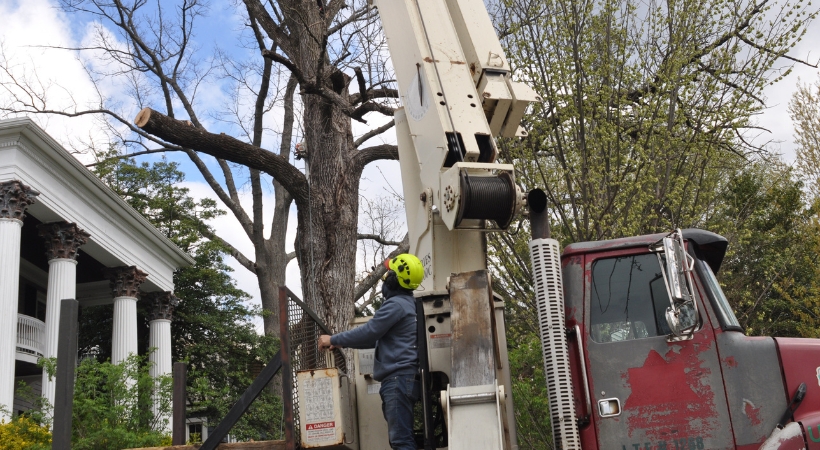
Expert crane operators ensure precise movements around valuable historic architecture.
How to Safely Remove Trees in Confined Spaces
Professional tree removal in confined spaces requires specialized equipment and advanced techniques that go far beyond basic tree cutting. The investment in proper tools and training separates qualified contractors from those who attempt urban removals with suburban methods.
Crane-Assisted Removal Systems
Modern urban tree removal relies on hydraulic cranes with precise load control and variable boom positioning. These systems allow operators to lift tree sections up and over structures rather than dropping them into confined spaces. Crane capacity must match both the weight and awkward positioning requirements of urban removals.
At A-AAA Tree Service, our crane operators bring over two decades of Baltimore-area-specific experience to every project. We own our equipment rather than renting, ensuring immediate availability and eliminating the scheduling delays that plague many contractors during busy seasons.
The key advantage of crane assistance lies in controlled removal. Each section can be precisely positioned, lifted over obstacles, and placed in staging areas without ground impact. This eliminates the vibration and debris scatter that damages surrounding structures and creates cleanup challenges.
Sectional Dismantling Methods
Tight space removals require trees to be removed in carefully planned sections, starting from the top and working methodically downward. Each cut must account for weight distribution, remaining tree stability, and safe positioning for ground crews.
Professional tree workers use advanced rigging techniques, including block and tackle systems, friction devices, and strategic tie-off points, to control each section's movement. This level of planning and execution prevents the uncontrolled falling that damages property and creates safety hazards.
The sectioning process requires extensive tree biology knowledge to identify natural breaking points, assess wood density variations, and predict how different species respond to cutting stress. This expertise comes only through years of hands-on experience with diverse tree types in challenging conditions.
Precision Rigging Techniques
Professional rigging transforms dangerous tree sections into manageable, controllable loads. Techniques include limb walking, where climbers work from the tips toward the trunk, and negative rigging, where mechanical advantage systems lower heavy sections gradually.
"In Baltimore's urban neighborhoods, we've learned that every tree removal is a custom engineering project. Each situation requires us to analyze load forces, access angles, and protection needs specific to that property's constraints." - Zach Riley, A-AAA Tree Service Licensed Tree Expert
Advanced rigging equipment includes specialized slings, shackles, and pulleys designed for the dynamic loads created during tree dismantling. This gear must meet strict safety ratings and undergo regular inspection to prevent failure during critical operations.
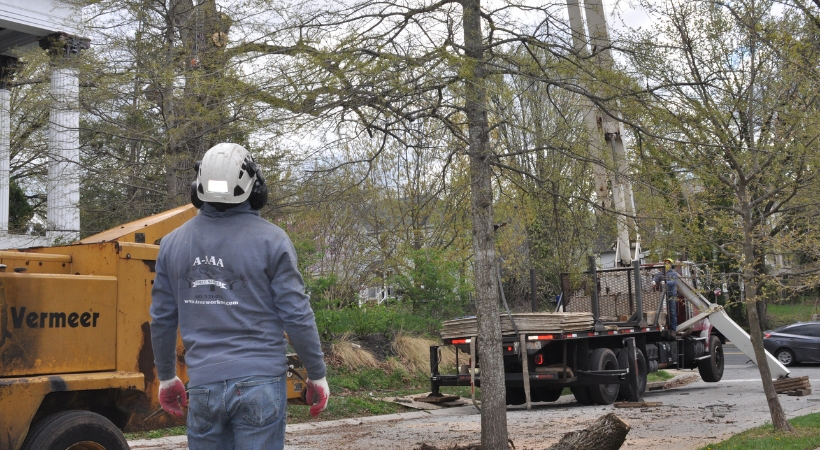
Professional operators utilize a range of specialized equipment for various access challenges.
What Are the Liability Risks Homeowners Face with Inadequate Tree Services?
The decision to hire unqualified tree contractors creates substantial liability exposure. Baltimore's dense urban environment amplifies these risks, turning minor contractor errors into major financial disasters and legal complications.
Insurance Complications
Standard insurance policies often exclude coverage for damage caused by uninsured or inadequately insured contractors. When amateur tree services damage neighboring properties, utility lines, or historic structures, property managers may find themselves financially responsible for repairs and business interruption claims. According to Insureon, property managers face average liability claims costs of $1 million per occurrence, making proper contractor insurance verification critical.
Professional tree services carry comprehensive general liability, workers' compensation, and specialized coverage that protects property managers from these exposures. Maryland Tree Expert licensing requirements mandate specific insurance minimums, but qualified contractors often carry coverage well above these minimums.
Safety Concerns
Tree removal in Baltimore’s dense neighborhoods isn’t just about getting the job done — it’s about protecting people and property. Inexperienced or unqualified contractors can create serious hazards, from falling debris and equipment accidents to damage that lingers long after the job is finished.
Professional crews follow strict safety protocols, setting up secure work zones, controlling traffic when needed, and scheduling work to minimize disruption for residents. They also carry the insurance and certifications required for high-risk urban environments, giving homeowners confidence that both their property and their neighbors are protected.
The risks don’t end once the tree is gone. Poor removal techniques can destabilize nearby trees, harm underground utilities, or trigger drainage problems that show up months later. Regular inspections and timely removal by qualified professionals help homeowners prevent emergencies before they happen — keeping families, neighbors, and historic Baltimore homes safe.
Property Damage Prevention
Baltimore's historic architecture and modern infrastructure require specialized damage prevention techniques during tree removal. Unqualified contractors often lack the knowledge and equipment needed to protect vulnerable structures, utility lines, and landscaping.
Professional services use protective padding, barrier systems, and careful equipment positioning to prevent incidental damage during operations. They understand local building materials, structural vulnerabilities, and utility configurations that vary dramatically across Baltimore's diverse neighborhoods.
The cost of repairing damage to historic stonework, original brick facades, or ornate architectural details often exceeds the original tree removal budget by thousands of dollars. Professional contractors prevent these expenses through careful planning and proper execution.
Frequently Asked Questions
For Safe, Professional Tree Removal in Baltimore's Toughest Spaces, Call A-AAA Tree Service
Property managers in Baltimore need contractors who understand urban challenges. A-AAA Tree Service brings over 20 years of Baltimore-specific expertise, Maryland Tree Expert licenses, and comprehensive insurance to every project.
We own our specialized equipment for immediate availability and have mastered the permit processes, utility coordination, and logistics that determine success in the city's tight spaces. Don't risk property damage or liability with contractors who treat urban removal as routine suburban work.
Contact A-AAA Tree Service at 410-321-0921 for your professional tight space removal proposal. Your properties deserve two decades of proven Baltimore expertise.
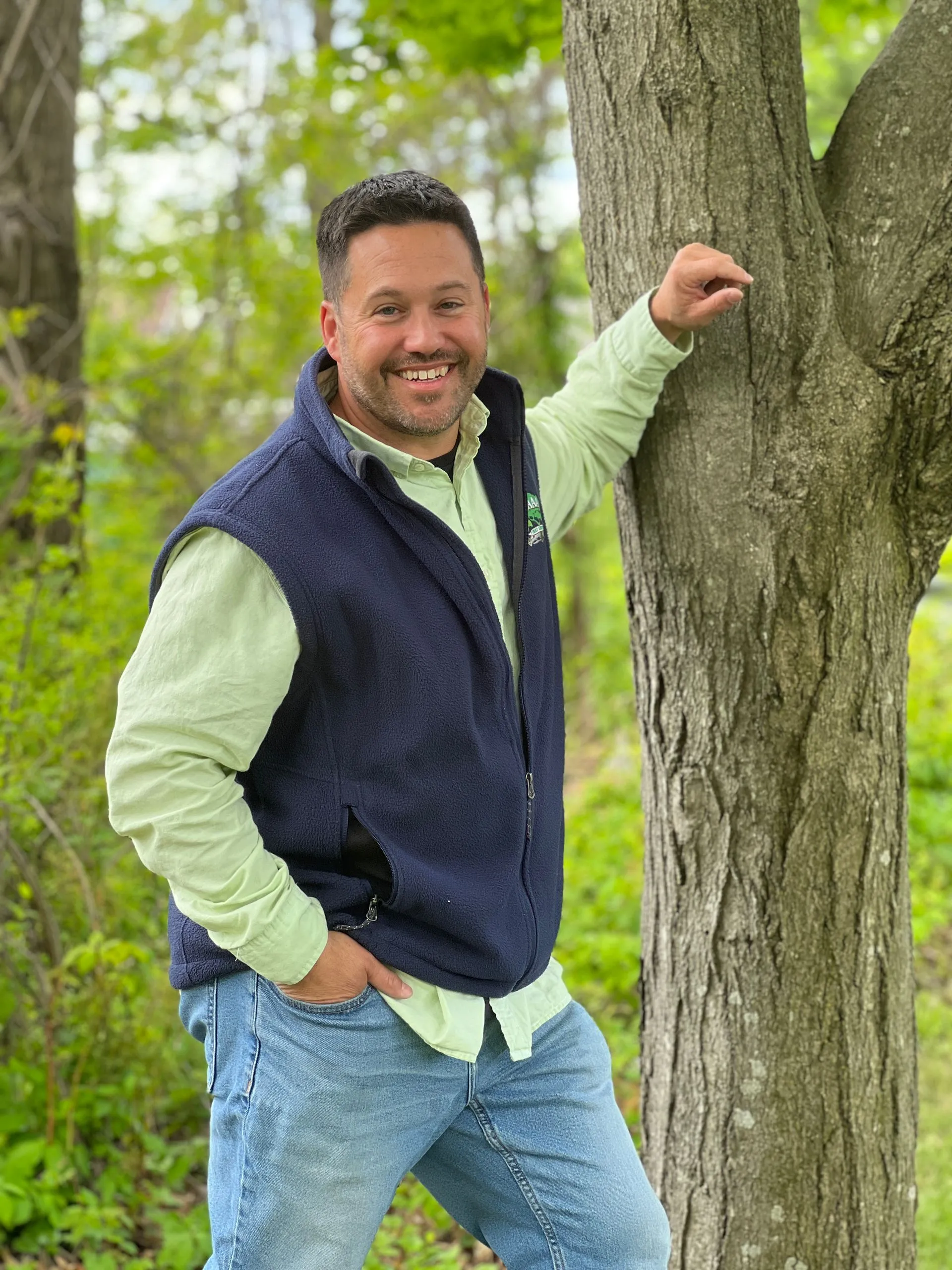
Andrew Senker got his first chance at management in 2003 when he started an IT consulting company that worked with some of the largest banks in the world. After 7 years with the firm, he transitioned to the wireless sector for 13 years, lending his expertise and ability to manage people and projects. In 2022, he purchased A-AAA Tree Service, determined to bring his knowledge to the tree service industry.
Related Articles
How to Tell If a Tree Is Dead or Just Stressed
A bare or thinning tree in a Baltimore-area summer may be stressed, not dead. Learn how to tell the difference and when to bring in a Licensed Tree Expert.
What Should You Do When a Tree Is Damaged in a Storm?
A storm hit your Baltimore County trees. Learn which damage is an emergency, which can wait, and when to request a proposal with a Licensed Tree Expert.
What Cabling and Bracing Does for Your Mature Trees
Learn how cabling and bracing can support mature trees with weak unions, included bark, or heavy limbs, and when they're the right call vs. removal.


