Summer storms offer a harsh reminder of Maryland’s storm vulnerability, where severe thunderstorms with 70 mph winds can leave thousands of residents without power across the Greater Baltimore Area. The aftermath tells the same story every year: downed trees crushing cars, power lines tangled in branches, and homeowners facing thousands in emergency cleanup costs.
The most frustrating part? Many of these situations could have been reduced or avoided with the right preparation. Strategic tree trimming helps address structural weaknesses that make trees more likely to fail in storms. It won’t eliminate the risk entirely, but it can significantly reduce it.
Key Takeaways
- Crown thinning reduces a tree’s “sail effect” by allowing wind to pass through the canopy rather than pushing against it, which is one of the most effective ways to prevent storm-related tree failure.
- Dead branches, co-dominant stems, overextended limbs, and overgrown canopies are the most common structural problems that lead to storm damage and should be addressed before the severe weather season.
- Structural pruning on young trees prevents dangerous growth patterns, like co-dominant stems, from developing in the first place, making it one of the best long-term investments in storm safety.
- Improper trimming techniques, like topping and over-thinning, actually increase storm vulnerability, which is why professional tree care is essential for storm preparation work.
Does Tree Trimming Actually Prevent Storm Damage?
No, tree trimming can’t prevent storm damage. But when it’s done correctly, it can significantly reduce the risk of failure during high winds, heavy rain, and ice.
The goal of pruning isn’t to make a tree “storm-proof.” It’s to remove the most likely failure points and improve how the tree handles stress. Done right, it helps trees bend, shed wind, and hold together better during severe weather.
How Proper Pruning Reduces Storm Damage Risk
Proper pruning to reduce storm damage risk isn’t about cutting more branches — it’s about cutting the right ones. Done correctly, pruning reduces storm risk in a few key ways:
- Reduces Wind Resistance: A dense canopy acts like a sail, catching wind and transferring that force through the tree. Thinning removes select interior branches so wind can pass through without overloading the structure.
- Removes the Most Likely Failure Points: Dead and diseased branches don’t flex like healthy wood — they snap. Removing them ahead of storm season eliminates the most predictable hazards.
- Improves Structure in Young Trees: Early pruning creates stronger branch spacing and a single leader. These issues are easy to correct when a tree is young and much harder once it matures.
- Improves Weight Distribution: Long, heavy limbs create leverage at their attachment points. Pruning reduces that weight so branches are less likely to break under stress.
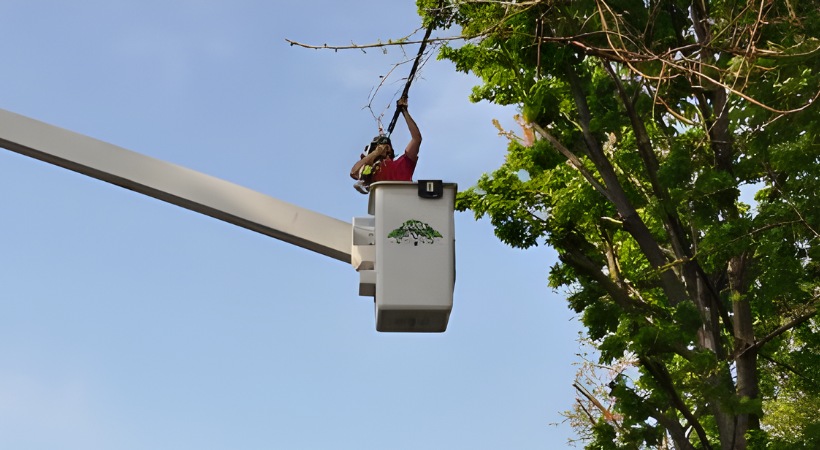
A tree care professional uses a bucket truck and pole saw to remove dead and overextended branches before storm season.
What Makes a Tree a Storm Safety Risk?
Storm damage usually isn’t random — it follows visible structural problems. If you know what to look for, you can often spot higher-risk trees before severe weather hits.
- Dead or Hanging Branches: Dead wood doesn’t flex — it snaps. If you can see dead or suspended limbs from the ground, they’re already a hazard and should be removed before storm season.
- Limbs Extending Too Far from the Canopy: Long, horizontal branches create leverage at their attachment point. The farther they extend, the more force wind puts on them during a storm.
- Overgrown or Dense Canopy: Trees that haven’t been thinned in years catch more wind and hold more moisture after rain, increasing overall stress during storms.
- Branches Growing into Each Other: Crossing or rubbing branches create wounds over time, allowing decay to weaken the tree from the inside out.
- Multiple Trunks or Split Leaders: Co-dominant stems often form weak unions that can split under pressure, sometimes causing major structural failure.
PRO TIP: For more detail on identifying these issues on your own property, see our guide on signs your trees need trimming.
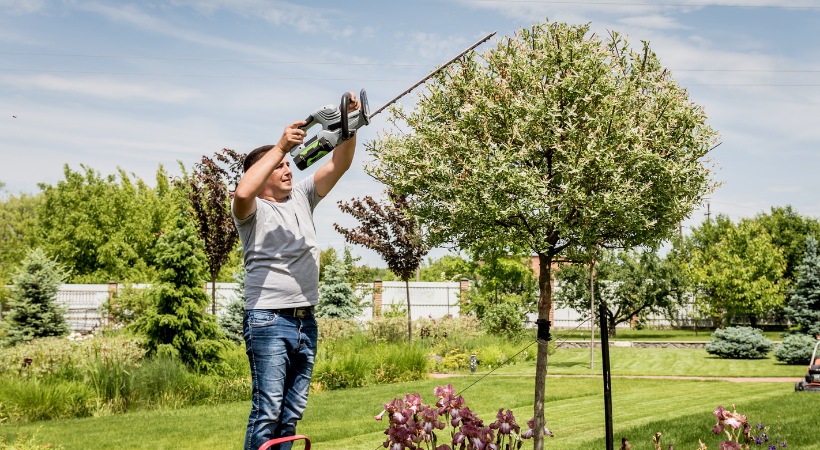
Unsafe pruning like this risks serious injury and permanently damages the tree. Hedge trimmers leave ragged stub cuts that invite decay, pests, and disease. Let a professional handle tree pruning to avoid injury to yourself or the tree.
When Is the Best Time to Trim Trees to Reduce Storm Damage Risk?
Early spring is the ideal window for storm-prep trimming in the Greater Baltimore Area because it puts the most time between your trimming appointment and Maryland’s severe weather season. Spring thunderstorms can arrive as early as April and intensify through May and June, followed by tropical systems during hurricane season from June through November. Once that cycle starts, you’re reacting to damage instead of doing your best to prevent it.
Saturated soil makes that timeline even more urgent. After heavy spring rains soak the ground, root systems lose their grip in the softened soil. A tree that might withstand 60 mph winds in dry conditions can topple in 40 mph winds when the ground is saturated. Trimming now reduces canopy weight and wind resistance before the spring rain cycle compounds the risk.
Early spring also gives your trees the best conditions to heal. Dormant or just-leafing-out canopies make branch structure clearly visible for accurate assessment, and cut surfaces heal quickly in cool, dry weather before fungal pathogens become active in warmer months.
Why Improper Tree Trimming Increases Storm Damage Risk
Timing helps — but it only works if the pruning is done correctly. Poor trimming can do more harm than good and make trees more likely to fail in a storm.
The most common DIY tree trimming mistakes include:
- Tree Topping: Cutting main branches back to stubs removes the tree’s natural structure and triggers a flush of weakly attached regrowth called watersprouts. These fast-growing shoots attach at the surface rather than developing the deep wood-grain connections that resist wind stress. A topped tree is far more dangerous in a storm than one that was never trimmed at all.
- Over-Thinning (Lion’s Tailing): Stripping interior branches while leaving foliage only at branch tips creates a lollipop effect that concentrates weight at the ends of limbs. Instead of reducing wind load, this increases leverage on attachment points and makes branches more likely to snap.
- Flush Cuts: Cutting too close to the trunk removes the branch collar, the tree’s natural healing zone. Without it, the wound can’t seal properly, creating an entry point for decay organisms that weaken the trunk over months and years.
- Over-Trimming: Removing more than 25% of a tree’s canopy in a single session severely stresses the tree and depletes its energy reserves. A stressed tree can’t compartmentalize wounds effectively, leaving it more vulnerable to decay and structural failure.
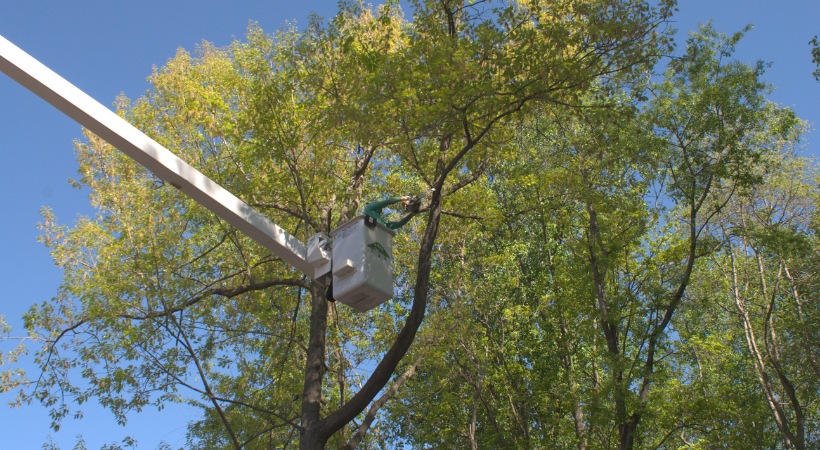
Professional crown thinning from a bucket truck allows tree care experts to selectively remove interior branches and reduce wind resistance throughout the canopy.
Frequently Asked Questions About Tree Trimming to Reduce Storm Damage Risk
How often should I have my trees trimmed to reduce storm damage risk?
Most mature trees should be trimmed every 3-5 years, while younger trees benefit from structural pruning every 2-3 years. Trees that overhang your roof, driveway, or power lines may need attention more frequently. A tree care professional can assess your specific trees and recommend a schedule based on species, age, and location on your property.
Does homeowners’ insurance cover storm damage from trees I didn’t maintain?
Homeowners insurance typically covers damage caused by fallen trees during storms, but there’s an important catch. If your insurer determines that a tree was visibly dead, diseased, or hazardous and you failed to address it, they may deny the claim based on property owner negligence. Preventive trimming creates a documented record that you’ve been maintaining your trees responsibly.
What types of trees are most likely to fail in a storm?
Trees with dead or diseased wood, dense canopies, long overextended limbs, or structural issues, like co-dominant stems, are more likely to fail. Species with weaker wood are also more prone to breakage.
Is it too late to trim once storm season starts?
Not necessarily, but your options are more limited. It’s better to address structural issues before storms become frequent. Once severe weather patterns set in, you’re often reacting instead of reducing risk.
Get Your Trees Ready Before Storm Season Hits
Maryland’s early spring window for tree trimming that helps reduce the risk of storm damage closes quickly as storm season approaches. The combination of our state’s climate challenges, environmental stressors, and documented storm damage makes proactive tree care essential rather than optional.
If your tree needs help standing up to the Greater Baltimore Area’s storms, the team at A-AAA Tree Service can help. Our Licensed Tree Experts can assess your tree, determine what to trim, and complete the job while following all industry standards. Already dealing with damage from a recent storm? We also offer storm damage cleanup across the greater Baltimore area. Call us today at 410-321-0921 or request a quote online for tree trimming.

After a 31-year career as a special education teacher in Baltimore County Public Schools, Marcee retired in 2025 to focus full time on A-AAA Tree Service. Having spent two years learning the business before her retirement, she now plays an active role in the company’s operations and customer care.
Related Articles
How to Tell If a Tree Is Dead or Just Stressed
A bare or thinning tree in a Baltimore-area summer may be stressed, not dead. Learn how to tell the difference and when to bring in a Licensed Tree Expert.
What Should You Do When a Tree Is Damaged in a Storm?
A storm hit your Baltimore County trees. Learn which damage is an emergency, which can wait, and when to request a proposal with a Licensed Tree Expert.
What Cabling and Bracing Does for Your Mature Trees
Learn how cabling and bracing can support mature trees with weak unions, included bark, or heavy limbs, and when they're the right call vs. removal.


