Winter Storm Fern’s late January ice assault left trees across Baltimore County and Northern Baltimore City severely damaged. While that storm was a major event, it also serves as a reminder of how much stress winter weather can place on trees.
As winter winds down and spring approaches, now is the perfect time to inspect your trees for signs of damage. Early spring offers a critical window to identify problems caused by snow, ice, road salt, and frozen soil – such as broken limbs, bark injuries, root stress, and compacted soil. Addressing these issues now gives trees time to recover before the growing season begins and helps prevent small problems from turning into serious safety hazards.
Key Takeaways
- Inspect trees carefully for damage after winter storms, looking for structural damage, root problems, bark issues, salt burn, and soil compaction.
- Address soil compaction and salt damage immediately by testing drainage, adding 2-4 inches of mulch around trees, and flushing road salt from soil with slow, deep watering to restore proper root function.
- Professional trimming is essential for storm-damaged branches because improper DIY trimming can harm trees and create safety hazards.
- Experienced arborists can safely remove at-risk branches using proper techniques and equipment.
- Some heavily damaged trees may need removal if they have major trunk damage, extensive root exposure, or structural instability, but many trees can recover with proper care and should be given at least one full growing season to demonstrate their resilience.
How to Help Trees Recover from Winter Damage
Winter storms can leave trees with hidden structural issues, root stress, and other problems that may not be obvious right away. Taking a careful, step-by-step approach can help you identify damage early and take the right actions to support recovery. Here are five important steps homeowners should take as winter transitions into spring.
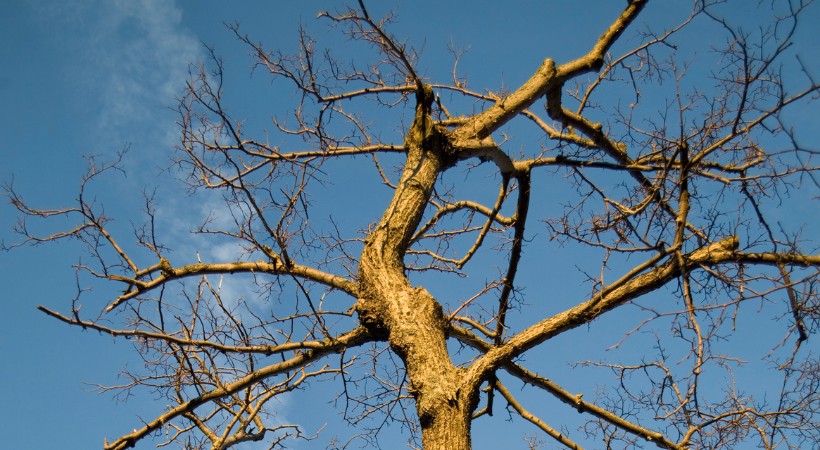
Winter storms can leave trees with bark damage and structural stress that becomes visible once the snow melts.
1. Inspect the Trees for Signs of Damage and Stress
Start by carefully inspecting your trees for signs of winter damage and stress. When checking your trees, always prioritize safety – never stand directly beneath a tree, avoid climbing ladders to inspect branches, and use binoculars to examine the canopy from a safe distance.
When examining your trees, look for the following things:
- Major Structural Damage: Look for large broken or hanging branches, trunk cracks or splits from ice expansion, and trees that have shifted to unsafe leaning positions. Ice-loaded branches that snapped during the storm often leave jagged wounds that need professional attention to heal properly. Pay special attention to any damage over walkways, driveways, or structures that could pose immediate safety risks.
- Root Zone Problems: Check for areas where roots have been exposed or heaved from soil expansion and contraction cycles after the storm. You’ll want to look for root systems that have been pushed up from the ground, soil that has cracked or separated around the tree base, and areas where the root flare has become buried or damaged from shifting soil.
- Bark and Crown Damage: Examine trees for torn, missing, or split bark from rapid freeze-thaw cycles, plus broken leader branches or multiple branch failures in the upper canopy. Ice weight often causes bark to peel away from trunks or creates wounds where branches tore away rather than breaking cleanly. Frost cracks may also form when warmer days give way to colder nights.
- Salt Burn and Chemical Damage: Watch for brown, scorched needles on evergreens that start at branch tips from road treatments during storms. Trees within 50 feet of heavily salted roads, driveways, and sidewalks are most affected by this damage. Look for white salt residue near these areas or dead grass and plants that indicate high salt concentration.
- Soil Compaction and Drainage Issues: Test for areas where heavy snow compressed soil, causing poor drainage, water pooling, or soil that feels hard-packed when tested with a garden fork. Clay soils common in Baltimore County are especially prone to severe compaction that prevents proper tree recovery.
Keep documentation of the damage so you can pass it along to experts who will help you determine the next step.
2. Reduce Soil Compaction and Refresh Mulch
Heavy snow (and the water released as it melts) can compact the ground and suffocate a tree’s roots. Without intervention, the area around the roots may become waterlogged, preventing them from getting the oxygen they need.
To check for compaction, wait until the weather is dry and pour water beneath your tree. In healthy conditions, the water should soak in quickly. If the ground is compacted, it will pool on the surface and take a long time to drain.
Correcting compaction takes patience and a few simple techniques. Adding mulch and organic matter around the root zone helps loosen the ground naturally and improve overall root health. Keep the mulch layer between 2–4 inches thick, and avoid piling it against the trunk, which can lead to rot around the root flare.
In cases of severe compaction, you can carefully use a garden fork or aerator to create small holes in the ground. Take care to avoid damaging tree roots while doing this.
3. Flush Road Salts from the Soil
Salt used on roads and sidewalks can easily reach nearby trees. As snow melts (or when vehicles splash slushy runoff), salt can be carried into your yard and absorbed into the ground around the roots. This buildup interferes with a tree’s ability to absorb water and nutrients.
Flushing the salt from the root zone helps restore normal root function. To do this, slowly soak the affected area with clean water to leach the salt deeper into the ground and away from the roots. The water should penetrate at least six inches, which can remove roughly half of the accumulated salt.
Only use this method if the area drains well, as excessive water can worsen compaction. If you’re unsure whether flushing salts is appropriate for your trees, a professional arborist can evaluate the site and recommend the safest solution.
4. Have a Professional Trim Damaged Branches
The weight of snow and ice on branches can eventually cause them to break. Even though tree branches naturally bow to avoid breaking, continued weight can cause cracks that reduce their durability and increase the risk of failure during the next storm. Identifying if your tree needs trimming often takes the eyes of a professional who can get a look at the canopy up close using a bucket truck or climbing equipment.
Experienced tree care professionals use all proper industry techniques to ensure they remove at-risk branches while leaving the healthy branches. While they can’t ensure your tree will be 100% safe during the next storm, proper trimming will leave it much sturdier.
Professionals can also look at any partially broken branches from winter storms and trim them. These branches may have jagged edges that won’t heal properly. A quick trim will provide a much more even surface for wound healing and callus development.
WARNING: Trimming a tree yourself is dangerous for you and the tree. And you may commit one of the many trimming mistakes that will actually harm your tree rather than improve its health. When in doubt, always trust a professional tree service to handle your trimming.
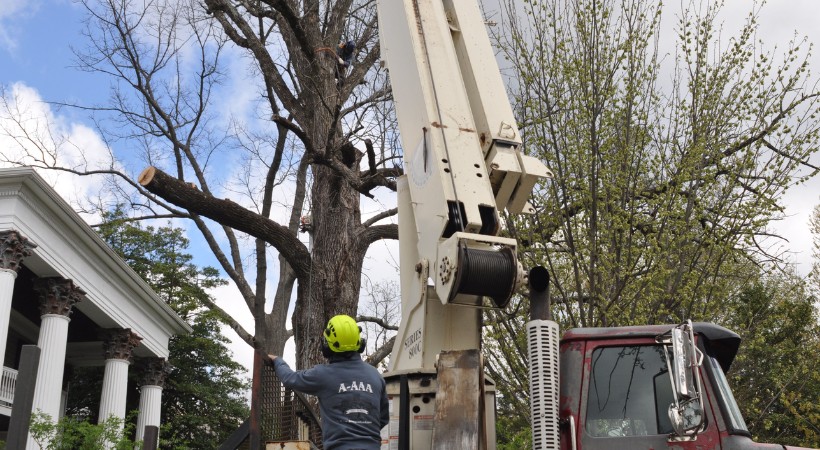
Professional equipment like cranes makes removing heavily damaged trees safer and more efficient than traditional methods.
5. Remove Any Dead or Heavily Damaged Trees
In some cases, winter storms can cause damage that a tree simply cannot recover from. Heavy snow, ice, and high winds may split trunks, expose major roots, or cause large sections of the canopy to fail. When this type of structural damage occurs, removal may be the safest and most practical option.
PRO TIP: Not sure if your tree can be saved? Check out our guide on the key signs that indicate a tree may need removal.
Removing heavily damaged trees can be more dangerous than removing healthy ones. Broken limbs, unstable trunks, and compromised root systems create serious safety risks. A professional tree service has the training and specialized equipment to remove hazardous trees safely and efficiently. An experienced arborist can also evaluate the damage and help determine whether removal is necessary or if the tree still has a chance to recover.
Frequently Asked Questions About Winter Tree Damage
Can I trim broken branches myself to help my tree recover faster?
Homeowners should only remove small twigs and debris they can safely reach from the ground. Winter storms, like Fern, create complex structural damage where improper cuts can actually slow healing and create entry points for diseases. Leave major trimming to professionals who understand how trees compartmentalize wounds.
How do I know if my tree is worth saving or should be removed?
Trees with major trunk damage, extensive root exposure, or structural instability may not recover well from winter storm damage. However, many trees that look severely damaged can surprise you with their resilience. Professional assessment is essential, but you should give trees at least one full growing season to demonstrate their recovery potential.
Will fertilizing help my storm-damaged trees recover faster?
Avoid fertilizing storm-damaged trees during recovery. Fertilizer forces new growth when trees need to focus energy on healing wounds and reestablishing root function after storm damage. Wait until trees show strong recovery signs before considering fertilization.
Can I use a regular garden hose to help flush salt from the soil?
Yes, but apply water slowly to allow deep soil penetration rather than quick surface runoff. Use a soaker hose or turn your regular hose to a gentle flow. The goal is to move salt through Baltimore’s clay soil, which requires patience and thorough watering over multiple sessions.
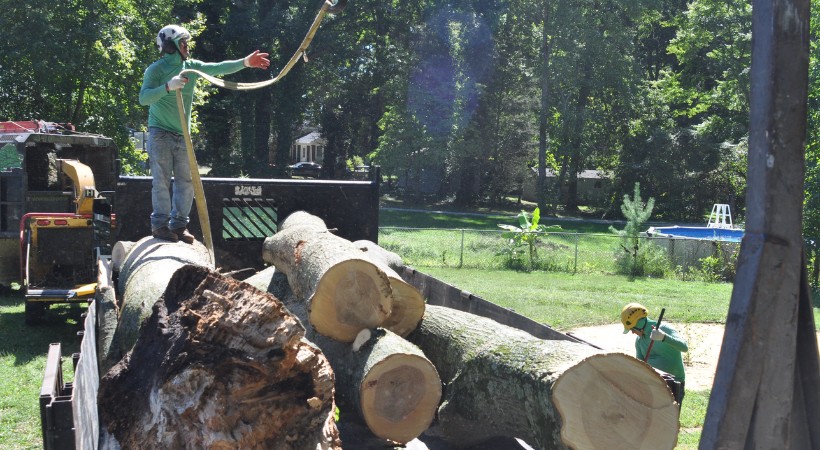
Professional tree removal includes safe cleanup and hauling of all debris from your property.
Get Professional Help for Winter Tree Damage Recovery
Winter storms can cause serious damage to trees, and some problems may not become obvious until the snow melts and temperatures begin to rise. Once you notice signs of damage, it’s important to address them quickly to prevent safety hazards and further decline.
At A-AAA Tree Service, we’ve spent more than 20 years helping homeowners care for their trees throughout the Greater Baltimore Area. Whether you need storm damage cleanup, restoration trimming, or a hazardous tree removed, our team is ready to help. Call us today at 410-205-5617 or request a proposal online.

After a 31-year career as a special education teacher in Baltimore County Public Schools, Marcee retired in 2025 to focus full time on A-AAA Tree Service. Having spent two years learning the business before her retirement, she now plays an active role in the company’s operations and customer care.
Related Articles
How to Tell If a Tree Is Dead or Just Stressed
A bare or thinning tree in a Baltimore-area summer may be stressed, not dead. Learn how to tell the difference and when to bring in a Licensed Tree Expert.
What Should You Do When a Tree Is Damaged in a Storm?
A storm hit your Baltimore County trees. Learn which damage is an emergency, which can wait, and when to request a proposal with a Licensed Tree Expert.
What Cabling and Bracing Does for Your Mature Trees
Learn how cabling and bracing can support mature trees with weak unions, included bark, or heavy limbs, and when they're the right call vs. removal.


