Central Maryland’s ongoing drought has left many trees in Roland Park and Perry Hall with thinning canopies, dropping leaves, and bare branches. Those symptoms can make a stressed tree look dead, even when it’s still alive and capable of recovering.
The challenge is that leaf loss and bare branches alone can’t tell you whether a tree is dead. To know what you’re dealing with, you need to look for signs of life in the buds, branches, bark, and canopy, while also watching for signs that indicate parts (or all) of the tree have died.
Looking at these signs together can give you a clearer picture of whether your tree is still alive and capable of recovering or has reached the point where removal may be necessary.
Key Takeaways
- Leaf loss and bare branches can be signs of severe drought stress and don’t necessarily mean the tree is dead.
- A scratch test on several branches can help you determine whether living tissue remains beneath the bark.
- If the tree still has viable roots and branches, addressing drought stress may help it recover, although severe or prolonged drought can cause permanent dieback.
- A dead or severely declining tree becomes a greater concern when its size, lean, or decay puts people or property within reach of a potential failure.
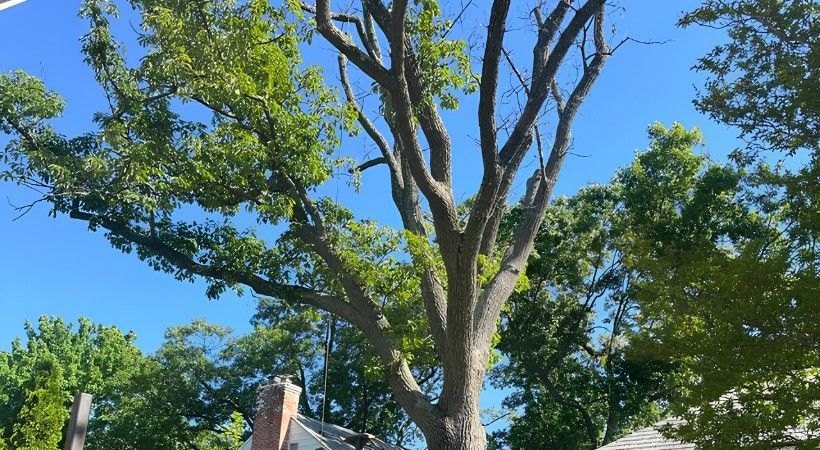
Leaf loss and bare branches in the upper canopy can look alarming, but they don’t necessarily mean the entire tree is dead.
Why Can a Stressed Tree Look Like It’s Dying?
During periods of extreme heat or drought, trees may respond by conserving water and energy rather than maintaining a full, healthy canopy. Those survival responses can make a living tree look like it’s in serious decline, especially when symptoms appear suddenly in the middle of summer.
Signs of summer stress can include:
- Early or excessive leaf drop
- Brown or scorched leaf edges
- Yellowing or pale foliage
- A thinning canopy
- Reduced or stunted new growth
- Bare or dying branches
IMPORTANT: Seeing one or more of these symptoms doesn’t necessarily mean the tree is dead. The next step is to look for signs of living tissue and determine whether the symptoms are temporary stress or actual dieback.
How Can You Tell If a Tree Is Actually Dead?
A scratch test is one simple way to check whether a branch is still alive. It reveals the condition of the living tissue just beneath the bark:
- Gently scrape away a small patch of bark on an accessible branch.
- Green, moist tissue underneath means that section is still alive.
- Brown, gray, or dry tissue means that section has died.
- Always check more than one branch before assuming the entire tree is dead. Individual branches can die while other parts of the tree remain healthy.
You can also look for other signs of life. Healthy buds or new growth are encouraging, and living young twigs are often flexible rather than dry and brittle. If you’re finding dead tissue, brittle branches, and dead or missing buds throughout the canopy, the tree may be experiencing more significant dieback.
What Should You Do If Your Tree Is Still Alive?
If your checks show green tissue, viable buds, or flexible branches, the tree is still alive, but it may need help recovering from summer stress. Focus on reducing additional stress while giving the tree time to recover.
There are a few things that give a stressed tree its best shot at recovery:
- Water deeply and slowly over as much of the root zone as practical, rather than concentrating water at the trunk. Check the soil about 6 inches down before watering; if it is dry, water slowly enough to soak the root zone.
- Hold off on heavy pruning while a tree is drought-stressed, and remove only clearly dead or damaged wood.
- Watch for the opposite problem too, since overwatering and root rot can mimic drought symptoms.
- If the tree is alive but has a structural defect, an arborist may recommend measures such as pruning or supplemental support.
What Should You Do If Your Tree Is Dying?
If your tree has widespread dead branches, continued canopy dieback, or other signs of decline, the next step is determining how much of the tree is still viable and whether it can safely remain in place. A ground-level check can help you spot signs of life or obvious damage, but it can’t always tell you what’s causing the decline or whether the tree poses a risk.
A Maryland Licensed Tree Expert can evaluate the tree for decay, structural defects, root problems, and other issues that may not be obvious from the ground. If the tree still has viable growth and poses little immediate risk, monitoring it into the next growing season may help show whether it can recover. If significant defects are present or the tree could fall on people or property, don’t wait to see whether it leafs out again.
Depending on the tree’s condition, the recommendation may be continued monitoring, corrective care, or professional tree removal. When hiring a tree care company, ask whether they employ a Maryland Licensed Tree Expert and carry appropriate tree-work insurance. A-AAA meets both of these standards.
When Does a Dead or Declining Tree Become a Hazard?
A dead or declining tree becomes a greater concern when it has defects that make it more likely to fail and people or property are within reach if it does. A dead tree in an open area, for example, presents a very different risk than one next to your home, driveway, or play area.
Signs that may increase the risk of failure include:
- Large cracks or cavities in the trunk
- Significant decay or mushrooms growing near the base
- Weak or damaged branch unions
- Dead or hanging branches
- A new or worsening lean
- Soil lifting or other signs of root damage
The more serious the defect and the more valuable the potential target, the more important it is to have the tree evaluated. If you’re unsure whether a declining tree should stay or go, review the signs it may be time for removal.
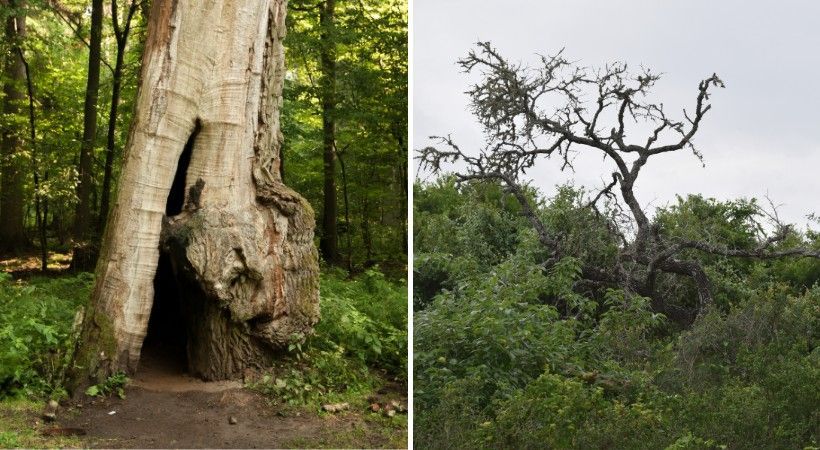
Cavities, trunk decay, and a thinning canopy are among the conditions that raise a tree’s odds of failure.
Frequently Asked Questions About Dead or Dying Trees
Can a tree be partially dead?
Yes. Individual branches or sections of a tree can die while the rest remains alive. This is why finding one brittle branch or brown tissue during a scratch test doesn’t mean the entire tree is dead. Look at signs of life throughout the canopy, and pay attention to whether dieback is isolated or continuing to spread.
Will a dead tree come back to life?
No. Once a tree or part of a tree has died, that tissue cannot recover. However, a severely stressed tree can look dead after losing leaves or branches and still have living tissue capable of producing new growth. Before assuming a bare tree is dead, check for viable buds, flexible branches, and green tissue beneath the bark.
Can a drought-stressed tree recover?
Deciduous trees can recover from a single drought, but recovery may extend into the following growing season, and severe drought can cause damage that takes several years to become fully apparent. It is repeated defoliation season after season, not one hard summer, that finally wears a tree down.
How long should I wait before deciding a tree is dead?
If the tree threatens nothing valuable, waiting until spring leaf-out is reasonable, so mark your calendar and recheck at bud break. But if it has size, lean, or decay over a house, driveway, or play area, do not wait, because a hazard does not pause for the growing season. A Licensed Tree Expert can tell you whether yours is a wait-and-watch tree or one that needs attention now.
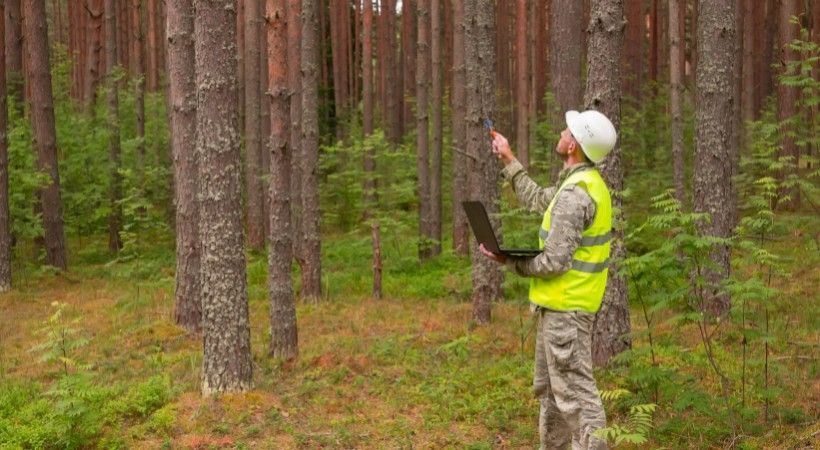
A Licensed Tree Expert evaluation reads internal decay, root condition, and canopy dieback that a ground-level check can miss.
Get Expert Answers About Your Tree from A-AAA Tree Service
If you’re not sure whether your tree can recover or has reached the point where removal may be necessary, you don’t have to make that call based on leaf loss or bare branches alone. A-AAA’s Maryland Licensed Tree Experts can evaluate your tree’s health, structure, and potential risk to determine the right next step.
Serving Roland Park, Perry Hall, and the greater Baltimore area since 2002, A-AAA looks for opportunities to preserve trees whenever possible and recommends removal when a tree’s condition makes it necessary. Request a proposal or call 410-645-0468 today to get clarity on your tree.

After a 31-year career as a special education teacher in Baltimore County Public Schools, Marcee retired in 2025 to focus full time on A-AAA Tree Service. Having spent two years learning the business before her retirement, she now plays an active role in the company’s operations and customer care.
Related Articles
Should I Grind a Stump or Leave It?
Not sure whether to grind that stump or leave it alone? Learn the risks, the decision points, and how A-AAA handles stump grinding in greater Baltimore.
What Should You Do When a Tree Is Damaged in a Storm?
A storm hit your Baltimore County trees. Learn which damage is an emergency, which can wait, and when to request a proposal with a Licensed Tree Expert.
What Cabling and Bracing Does for Your Mature Trees
Learn how cabling and bracing can support mature trees with weak unions, included bark, or heavy limbs, and when they're the right call vs. removal.