
After a summer spent mowing, trimming, and working around an old stump, fall cleanup can bring it right back to the top of your to-do list. Maybe you’re tired of maneuvering the mower around it, or maybe clearing fallen leaves has you wondering again: Should I grind the stump or leave it in place?
For homeowners in Kingsville and the greater Baltimore area, the answer depends on the stump, its location, and what you want to do with that part of your yard. Leaving a stump temporarily isn’t necessarily a problem, but as it sits, decay, insect activity, and unwanted regrowth can make it less appealing to keep around.
Key Takeaways
- A stump left in the ground can take years to fully decay, and it is not harmless while that happens.
- A-AAA grinds stumps four to six inches below grade and backfills the area as a standard, standalone service.
- A Miss Utility ticket is required, without exception, before any stump grinding job begins.
- Stumps that interfere with mowing, show regrowth or decay, create a trip hazard, or occupy a future planting area are stronger candidates for grinding sooner rather than later.
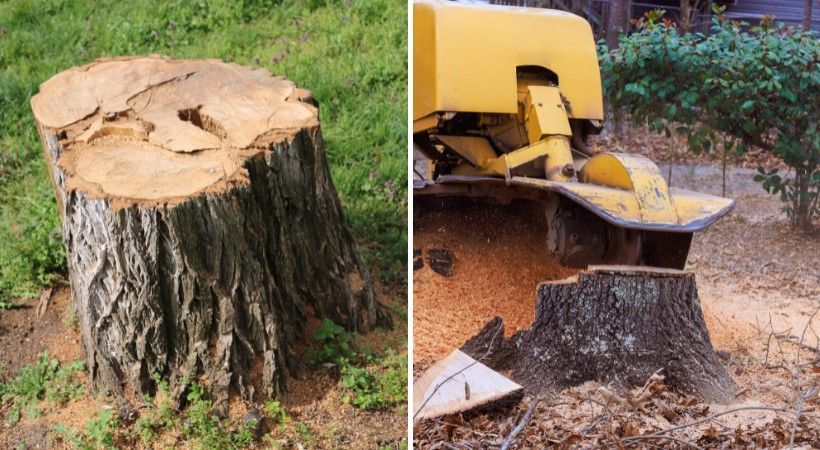
Stump grinding turns the remaining trunk into wood chips that can be removed, backfilled, or reused as mulch.
Should You Grind the Stump or Leave It for Now?
There isn’t one right answer for every stump. Whether it makes sense to grind it now or leave it for another season depends on its condition, location, and what you plan to do with that part of your yard. When deciding what makes the most sense for your property, consider the following:
- Is the stump getting in the way? If you’ve spent all summer maneuvering the mower around it or it sits where people regularly walk or play, removing it eliminates an ongoing obstacle.
- Do you want to use that part of the yard differently? A stump can limit plans for new landscaping, lawn expansion, a patio, play area, or other changes to the space.
- Are you planning to plant another tree nearby? Grinding can clear the immediate area, although the old root system will remain underground and should be considered when choosing the new planting location.
- Is the stump already showing signs of change? New sprouts, soft or decaying wood, or fungal growth are reasons to take a closer look at what is happening rather than assuming the stump will remain as it is.
If the stump is interfering with how you use the yard or you have plans for the space, grinding it sooner may make sense. A solid stump tucked into a low-traffic area with no immediate plans for the space may be reasonable to leave for another season.
What Happens If You Leave a Stump in the Ground?
Leaving a stump doesn’t mean it will remain unchanged. The remaining wood and root system will gradually break down, and depending on the tree species and its condition when removed, you may notice other changes along the way:
- Slow Decay: Full breakdown of an unground stump can take years, not months.
- Pest Activity: A decaying stump can provide habitat for insects and other organisms that use dead wood. That doesn’t automatically mean those insects will spread to your house or healthy trees.
- Potential Disease Concerns: If the removed tree was affected by a root disease, such as Armillaria, infected roots and the remaining stump can sometimes serve as a source of infection for susceptible nearby plants. Mushroom growth alone, however, doesn’t establish that Armillaria is present.
- Regrowth: Many species can continue sending up new shoots from the stump or root system after the tree has been cut down, creating an ongoing maintenance chore.
Maryland’s humid summers speed decay and fungal activity up, so these problems often move faster here than they would in a drier climate. Stump grindingremoves the visible stump and accelerates decomposition of the remaining wood.
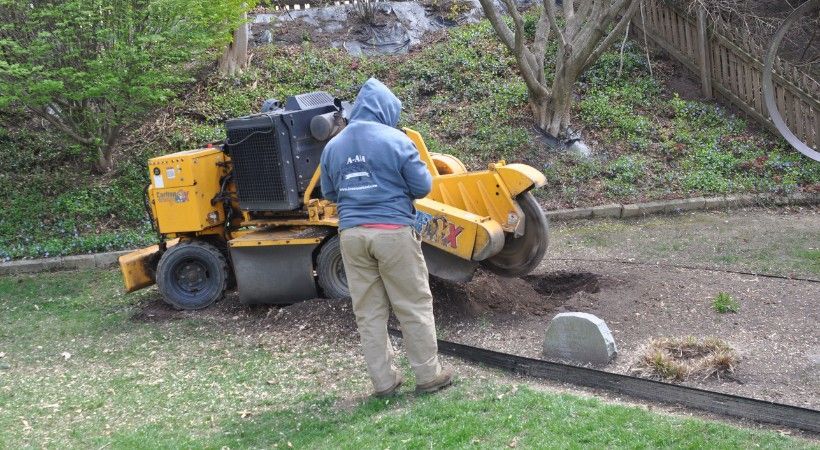
A-AAA Tree Service grinds a stump below ground level, allowing the area to be backfilled and leveled afterward.
Why Is Fall a Good Time to Remove Stumps?
You can grind a stump during other times of the year, but fall offers a few practical advantages that can make the timing worthwhile. Taking care of it now can help with fall tree care while also getting your yard ready for next spring.
- Put the grindings to use as fall mulch. Clean stump grindings can be reused around other trees and planting beds, where a proper layer of mulch helps insulate roots, retain soil moisture, and moderate soil temperature as conditions change going into winter.
- Give the area time to settle before spring landscaping. The remaining roots and wood below ground continue to decompose after grinding, and the filled area may settle. Grinding in fall gives that process a head start before you want to reseed or tackle landscaping projects in spring.
- Remove an obstacle before another growing season begins. If you spent the summer mowing and trimming around the stump, taking care of it now means it won’t still be in the way when grass starts growing again next spring.
- Get spring landscaping projects one step closer to ready. A stump can hold up plans for a new garden bed, lawn improvements, or other changes to the yard. Removing it in fall lets you address soil or grading needs ahead of time instead of discovering them when you’re ready to start the project.
- Make fall cleanup easier going forward. Stumps and exposed roots can trap leaves and debris, adding another spot to rake and clean around. Once the stump is ground and the area leveled, future seasonal cleanup becomes easier.
Frequently Asked Questions About Stump Grinding
What happens if I leave a tree stump in the ground?
Decay and pests aside, a stump and exposed surface roots can interfere with mowing and create trip or equipment hazards.
Will a tree stump grow back or sprout again?
Whether a stump resprouts depends heavily on species, tree age, and the condition of the remaining roots. Some hardwoods, including several maples, can produce vigorous stump or root sprouts after cutting.
Do stumps attract termites?
Decaying stumps can provide a food source and habitat for termites and other wood-destroying insects. A stump doesn’t necessarily create a termite problem for your home, but its proximity to structures is worth considering when deciding whether to leave it in place or have it ground.
How are surface roots handled during stump grinding?
A-AAA’s standard grind addresses visible surface roots along with the stump itself. That’s partially why the area is left level enough to mow or reseed once the work’s done, instead of leaving root humps that resurface as the ground settles.
Can I plant over a ground stump?
You can sometimes replant near the old stump location, but planting directly into the old stump cavity isn’t ideal. Grinding leaves much of the old root system underground, and the remaining wood will continue to decompose and may cause settling. For a new tree, remove the excess grinding material, replace poor soil as needed, and choose a planting location with adequate uncompacted soil for the new root system.
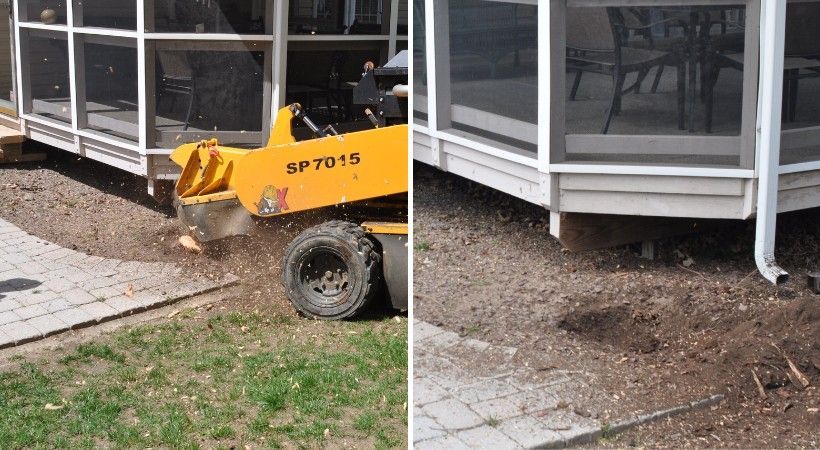
Stump grinding clears a stump beside a patio, leaving the space ready for future landscaping.
Don’t Spend Another Season Working Around That Stump – Call A-AAA Tree Service
If you’ve spent the summer mowing around an old stump or fall cleanup has reminded you how much space it takes up, you don’t have to carry it into another year. A-AAA Tree Service offers standalone stump grinding throughout the greater Baltimore area, with no minimum number or size of stumps required.
Request a proposal for stump grinding or call us today at 410-645-0468.

After a 31-year career as a special education teacher in Baltimore County Public Schools, Marcee retired in 2025 to focus full time on A-AAA Tree Service. Having spent two years learning the business before her retirement, she now plays an active role in the company’s operations and customer care.
Related Articles
How to Tell If a Tree Is Dead or Just Stressed
A bare or thinning tree in a Baltimore-area summer may be stressed, not dead. Learn how to tell the difference and when to bring in a Licensed Tree Expert.
What Should You Do When a Tree Is Damaged in a Storm?
A storm hit your Baltimore County trees. Learn which damage is an emergency, which can wait, and when to request a proposal with a Licensed Tree Expert.
What Cabling and Bracing Does for Your Mature Trees
Learn how cabling and bracing can support mature trees with weak unions, included bark, or heavy limbs, and when they're the right call vs. removal.


